
No products in the cart.

Have a question?
Submit your question below
(one question per person please)
If this doesn’t work for you,
submit your question via email to
francine@additivefreekids.com.au
Recently Added
QUESTION:
I’d be interested to know what you think of this arrowroot starch from the gluten free co? I know you prefer to thicken with whole foods like psyllium, chia etc but if using arrowroot would this be okay. And which is better – tapioca starch or arrowroot starch?

ANSWER:
When it comes to starches its your choice which source it comes from whether it is tapioca or arrowroot. The issue is how is the starch obtained? There is a lot of variance when it comes to starches in terms of how they are processed. Some are created by physical processes, such as grinding, others are treated as enzymes to create the starches.
I would recommend that you ask them whether this has been milled and ground and if any enzymes have been used in the process. The website indicates to me that it may be milled as it has made reference to other allergens that are milled at the site. Let us know how you go with the question!
Category:
Product Questions
Leave a Reply
QUESTION:
Hi Frankie, I would love to know what you think of kombucha – not necessarily the sugar laden store bought kind. We buy kombucha from our local markets – a business called Unscripted Fermentation which do small batch ferments, pickles and sauces . I’ve asked a few questions (for eg, they don’t use organic fruit) but am not sure what I need to know to assess whether this is an okay option. Their website doesn’t say much – Unscripted Fermentation Grateful for any views you might have on whether this is a good option, or on the questions I should ask.
ANSWER:
Kombucha starts with a scoby which is symbiotic culture of bacteria and yeast. The scoby is usually made from water, sugar, black tea, unflavoured kombucha (if store bought) or you can get a scoby from a friend when it reproduces.
Then the first fermentation the ingredients usually are water, sugar, black or green tea, unflavoured kombucha (if store bought). You could ask more about what type of tea they have used – where has it been sourced, is it organic etc.
The second fermentation is where sweeteners are added. You could ask what sweetener (fruit, honey or sugar) they have used. If they have used fruit juice – what type – fresh, cold pressed, long life etc. If they have used honey, what type of honey, processed, from farmers etc. If they have used fruit – as you have said already, is it organic, unsprayed, conventional.
Hope that helps!
Category:
Product Questions
Leave a Reply
QUESTION:
In very disappointing news, Healthy Bake bread has recently changed its ingredients to include soy lecithin. This is in all their bread products. I understand that Soy lecithin can be ok – it depends on how it is processed. Can you advise whether Healthy Bake methods are okay? Or what specific questions do I need to ask them if I approach them myself?
ANSWER:
The lecithin in soy is natural, however it depends on how it is extracted and whether it has been extracted using chemical solvents like hexane. Native lecithin is derived from soy bean oil in four steps – hydration of phosphatides, separation of the sludge, drying and cooling. Soy lecithin used in most industrial applications have been obtained from modifications involving fractionation in alcohol, hydrolysis (enzyme, acid or alkali, acetylation or hydroxylation.
You could ask them what process they used to obtain the soy lecithin now that you know a little more about the methods that are often used. Let me know how you go!
Category:
Product Questions
Leave a Reply
QUESTION:
Salad in packets – is it correct that if you buy any salad in packets that it has been treated/sprayed with something in order to keep it fresh? Would this also apply to organic packaged salads? Some supermarkets only have packaged salad mixes available so this is of particular concern. Should we be worried by what it has been treated with?
ANSWER:
My understanding is that all fresh packaged salads are washed in a diluted chlorine solution. The chlorine is used to kill harmful bacteria and ensure the salads are safe for consumption. Organic produce is also allowed to use a weak chlorine solution.
In theory, there is supposed to be no trace of the chlorine 24 hours after treatment. Chlorine can cause excess free radicals which lead to cell damage. Consuming chlorine can kill off our healthy bacteria leading to imbalances in our gut flora and hence having a flow on impact to our immune system.
Ideally buying fresh salads (not packaged) is best and wash them yourself.
Category:
Product Questions
Leave a Reply
QUESTION:
Pre-cut vegetables I read recently that any pre-cut vegetables must be chemically washed (per Australian guidelines) before being packaged and sold. Would this apply to all frozen vegetables including organic?
ANSWER:
Pre cut vegetables are washed in chlorinated water to disinfect and thereby reduced the number of micro-organisms present on raw fruit and vegetables.
My understanding is that the process for frozen vegetables is different – the fruit and vegetables are blanched in scalding water before freezing. The blanching processes cleanses the surface of dirt and organisms.
Category:
Product Questions
Leave a Reply
Most Popular
QUESTION:
Is it right or wrong to assume all product ingredients with a number are an additive?
ANSWER:
If you see a product with a number on it, it will be an additive. The categorisation of additives, generally speaking are:
100 Colours
200 Preservatives
300 Antioxidants, acidity regulators
400 Emulsifiers, Stabilisers, thickeners, gelling agents
500 Anti caking agents, raising agents, firming agents
600 Flavour enhancers
900 Sweeteners
Manufacturers have realised that consumers have become savvy and seek to avoid numbers, so they will use the name instead. For example, you may see “Carrageenan” listed on an ingredient label. It is additive 407, but the manufacturer would prefer to not alert customers to the fact that it is an additive.
They key is to understanding each ingredient and whether you recognise that as an ingredient that you have in your pantry and would cook with it yourself. If not, pop the product back on the supermarket shelf.
Category:
Additives
Leave a Reply
QUESTION:
I’d love some guidance when choosing Asian cuisine sauces – for example fish sauce, oyster sauce, sesame oil, miso paste, hoisin sauce, sweet chilli sauce, chilli sauce, plum sauce, rice wine vinegar etc. I know I have mentioned a lot of things but just feel like there is such a gap when it comes to these sauces – we know the sub’s for soy sauce (ie coconut aminos or tamari) Vit the others I’ve never seen healthy options for.
ANSWER:
There are a LOT of questions here. I will try and address these broadly. I will start by saying that most of these options are very high in natural glutamates and high in sugar.
If you are following an additive free diet, generally speaking these are usually kept low. Coconut aminos and Tamari are also very high in natural glutamates and should be used sparingly.
It may be more appropriate to pick a few sauces as the subject of a future product review.
Let’s take a look at the some of the sauces you have mentioned and their typical ingredients:
Oyster sauce
Typical ingredients include oyster extract, preservatives, thickeners, flavour enhancers, yeast extract, flavours – its an additive nightmare really! So when you see recipes that are calling for oyster sauce, what they are really calling for is a dose of flavour enhancers.
I haven’t used this product since I went additive free (as it is very high in glutamates and flavour enhancers).
You could make your own. My understanding is that you cook oysters in water for a prolonged period of time with salt, sugar and perhaps soy sauce. For those that are sensitive to glutamates, this is likely to be very high.
Miso paste
It is possible to get cleaner versions of miso paste. I am not particularly a fan of miso as it is made by fermenting soybeans with salt and a mould. If you are sensitive to glutamates, you will want to avoid this product.
Hoisin sauce
Typical ingredients include sugar, soy beans, thickeners (ie tapioca starch), colours, citric acids.
Even if you remove the additional additives, I avoid products with soy as much as possible as it is an endocrine disruptor. Soy is also very high in natural glutamates, so if you react to flavour enhancers you would want to limit your soy intake.
I haven’t reviewed the market recently for hoisin sauces to know if there are any clean ones.
Fish sauce
You can find cleaner versions of fish sauce. You will want to look out for all-natural, first press, “extra virgin” fish sauce that doesn’t contain preservatives or MSG.
The traditional method is to salt black anchovies then slow age them in wooden barrels.
Again, this is would be very high in natural glutamates, so you would want to watch your intake levels if you are sensitive to glutamates.
Sesame oil
With most oils, it is important to find out if the oil has been further refined through solvent extractions, neutralisation or bleaching. This is often done to improve its aesthetic appearance.
Sesame oil can be derived from quality seeds and doesn’t need further purification. You would want to look out for cold pressed sesame oil.
Sweet chilli sauce, chilli sauce, plum sauce
Plum sauce will often contain thickeners, gums and flavour enhancers. This is one likely to be a little harder to find an additive free version.
You should be able to find cleaner versions of sweet chilli sauce and chilli sauces.
I haven’t recently reviewed all the products on the market across these categories. I often make my own for these.
Rice wine vinegar
Usually rice wine vinegar is made from a sticky rice. Once rice is cooked, yeast is added into the rice to form a mixture. This is then transferred to a container to increase the temperature which then quickens the process. After a few days or weeks, the by product of the fermentation process is rice wine. The fermentation converts the sugars found in rice to alcohol.
The next step to create the vinegar is to oxidate the wine by introducing oxygen, which converts it to acetic acid. Usually you need an enzyme (acetobacter) to facilitate this conversion process. This is usually used in commercialised operations to speed up the process as traditionally it takes a long time to ferment.
Once again, due to the fermenting process, this is likely to have high natural glutamates and should be used sparingly if you react to flavour enhancers.
Category:
Product Questions
Following on from this topic, I’m curious to know if its advisable (health wise) to have foods high/moderately high in natural glutamates if you are not sensitive glutamates/flavour enhancers.
-
I will preface this answer with I am not a medical professional. If you have a specific ailment / issue you may wish to discuss with your medical professional the benefits of adopting a low glutamate diet to assist with your ailment.
My understanding is that if you or your children suffer with autism, ADD/ADHD, sensory processing disorders, Tourette’s, insomnia, bedwetting, OCD, bipolar disorders, anxiety disorders, self stimulatory behaviours (ie rocking, pacing, hand flapping, repetitive body movements) you would want to consider a low glutamate diet.
Glutamates can be very destructive in the brain (if it is found in excess OUTSIDE) of brain cells. If you eat processed free glutamates this will cause excess glutamate to exist outside the brain cells. The brain will try and maintain a low level of glutamate outside the brain cell.
It has a hard time doing this if toxic metals are present, glyphosate is present, strokes, seizures, brain tumours or traumatic brain injury / concussions, autoimmune diseases, infections that have crossed the blood brain barrier, brain inflammation, EMFs.
If you don’t have any sensitivities or ailments, you may choose to opt for foods that are high / moderately high in natural glutamates (examples – seaweed, tomatoes, mushrooms, broccoli, grapes, parmesan cheese etc.) They have some amazing health benefits.
Leave a Reply
QUESTION:
You mentioned that tapioca starch is highly processed and that tapioca starch and flour are two different things. I’ve come across some products labelled as tapioca flour (starch)/tapioca starch (flour) – why are the terms interchangeable here? How can we distinguish which one is additive free at the shops if we choose not to shop at TWC. Thank you!
ANSWER:
Yes, there is a difference between tapioca starch, flour and modified tapioca starch.
Tapioca flour is made from the crushed pulp of the cassava root. Cassava flour uses the whole root which tapioca flour use only the starchy pulp. It is normally is made by grinding tapioca pearls down into a powder. That’s it!
Tapioca starch is usually made by washing the pulp, spinning and washing until the mix is mostly pure starch and water. The starch is then dried.
The problem is that many commercial operations use modified tapioca starch and don’t declare the difference on the ingredient label.
Modified tapioca starch is made by physically altering the starch using enzymes or chemicals to change its inherent properties, and is considered an additive.
Unfortunately, it is difficult to tell just from the label as you don’t know what the processing methods are. This is one of the reasons why I need to ask so many questions of manufacturers to get the truth for you.
Category:
Ultra Processed Ingredients
I have checked the processing of that one and I am happy with it. It is the only one that I have found so far that meets my tests. I am trying to encourage other manufacturers to use this one instead.
Thanks for the explanation, Frankie! I’m looking at tapioca flour from the TWC website (AFK approved label) the ingredients state “organic tapioca starch”?
Leave a Reply
QUESTION:
Does organic food also have additives?
ANSWER:
Yes, they can still have additives. The organic certification allows non -organic ingredients to be used in certified organic food products.
These ingredients include enzymes, colours, flavours, yeasts / moulds, sweeteners, fining agents, clarification aids, stabilisers, gums, mineral salts.
Category:
Additives
Leave a Reply
QUESTION
I was just wondering if there is a difference additives wise in different brands of extra virgin olive oil? I’ve recently swapped to a cheaper one, trying to save money but I’m not sure if it’s affecting me. It’s squeaky gate extra virgin olive oil first cold pressed all rounder.
ANSWER
Generally speaking, olive oils don’t contain additive (unless you are using an olive oil spray using propellants).
It usually has a long life span (12-18 months) depending on how it is stored.
To be labelled as Extra Virgin it needs to be pass certain chemical and sensory tests which are indicators of quality. These standards are the minimum level quality required. So you can still have variations in quality of the oil and hence different pricing points.
There are a variety of reasons for this different price point, it could be due to blends of olives being used as opposed to single variety, the supply available, different harvest practices, different infrastructure costs and flavour.
I often buy my oil in bulk from local producers and I have a special olive oil that is more expensive from an artisan producer that I use for raw salads.
So, if you aren’t fussy on your olive oil flavour, it would be a great place to save some dollars in the weekly budget.
Category:
Product Questions
Thanks Frankie. The lady on the front counter at Vasse Virgins tried to tell me they didn’t use additives but I didn’t believe her at the time. Great information. Thanks.
-
Vasse Virgin was a little cagey when I asked them lots of questions. Their olive oil should be fine, however their labelling wasn’t great on other products and additives were hiding in compound ingredients.
Yes definitely, unless you are buying a spray pump (from a kitchen shop) that you pop your own olive oil in and squirt out.
Hi again, just wondering if you recommend avoiding spray oils?
I’m curious what oil you use if you don’t mind saying? Glad in terms of additives it should be fine though, thank you
-
I use olive oil (I buy in bulk with local community members from a small local supplier) and coconut oil. It’s not a recognised brand name from the supermarket.
Leave a Reply
Additives
Soda water is water that has been infused with carbon dioxide gas under pressure. Carbon dioxide is a colourless, tasteless gas that is naturally present in the atmosphere (in small amounts). The basic process is to force carbon dioxide to dissolve in water. CO2 dissolves much better in cold water rather than hot. From an additive perspective, I am happy to drink unflavoured soda water.
Categories:
Additives
Product Questions
Leave a Reply
QUESTION:
Liddell’s lactose free milk and yoghurt – your thoughts?
ANSWER:
Usually lactose free products contain an enzyme called “lactase” Lactase is usually produced in humans in the small intestine. The lactase is important for digesting milk and breaking down the lactose. If you have a deficiency of this enzyme, then you will experience lactose intolerant symptoms.
Adding enzymes to milk results in the hydrolysis of the lactose which allows it to be digestible for everyone.
What most people don’t realise is that the lactase that is produced commercially is extracted from yeasts (kluyveromyces fragilis and kluyveromyces lactis) and from moulds (aspergillus niger and aspergillus oryzae).
My preference is that if you are lactose intolerant, you are better off choosing an alternative milk such as oat milk or almond milk instead of lactose milk / yoghurt etc.
Leave a Reply
These two raising agents are additives that are usually derived from minerals and are one of the safest additives. I regularly use both bicarb soda and baking powder.
Category:
Additives
Leave a Reply
QU: Thoughts on Barley malt extract?
Answer:
Barley malt extract – is an additive that frequently includes MSG (free glutamic acid) – it is addictive and makes you want to eat lots of them!!
Many manufacturers like to use barley malt extract in their products as they are not required to label the product as containing MSG. MSG is an excitotoxin that shrivels and kills brain cells. An excitotoxin is a chemical that causes a brain cell to become overexcited and fire uncontrollably, leading to cell death. Common adverse reactions resulting from MSG can also include:
- asthma
- hyperactivity
- depression
- mood changes
- sleeplessness
- nausea
- migraines
In short, I always prefer to avoid barley malt extract.
.
Leave a Reply
Generally speaking I would prefer to avoid chocolate with these ingredients. However, most chocolate contains soy lecithin. Soy lecithin can be ok – it depends on how it is processed. I avoid all products with inulin.
Category:
Additives
Leave a Reply
QUESTION:
Extracts. Would you recommend avoiding spice, fruit and vegetable extracts.
ANSWER:
Generally, yes I do avoid spice, fruit and vegetable extracts. They are ultra processed ingredients and very difficult to know each and every ingredient or process used in these ingredients. Manufacturers aren’t always forthcoming with all the details on these ingredients either.
Is there any evidence linking fruit extract to any health concerns?
-
This is a tricky one. To find evidence, you would need to research how the extract had been made (extracted) using what substance and then searching for evidence based on that substance. It is unlikely you would find a lot of evidence searching just for fruit extracts on their own.
Leave a Reply
QUESTION:
Olive oil is it completely safe? Can you please help me understand this. We consider olive oil safe in general but I hear some people start saying that some processing aids might be applied to olive oil too. If methods tomato oil product cheaper exist what can stop them from applying it to olive oil? Why do we consider cold extract olive oil safe, while sunflower oil extracted the best possible way is still considered best to avoid. Thank you
ANSWER:
Nothing is completely safe anymore unless a detailed audit has been conducted to give you that assurance. Every single product on the supermarket shelf, can have processing aids used (and not declared). There is a lot of manipulation regarding those processing aids and many manufacturers do not want to disclose the details of them.
I attempted to do this work on behalf of the AFK community with the Additive Free Marketplace. Every ingredient and processing aid had been reviewed and analysed to give you that assurance.
However we have to crawl before we can walk…. The Additive Free Advocates membership is designed to provide the info to people that are wanting it to make the best decisions they can. We need a bigger movement before we can move to certification of products (ingredients and processing aids). Or…perhaps I need to create a product line (might be easier and quicker in comparison) that you know is clean and free of processing aids lol!
In the interim, until the movement is bigger (COVID has put this on the back burner for most families, thrust into survival mode now) the Additive Free Advocates membership provides guidance (based on what has been declared on the label) as a low cost option instead.
If you are concerned, you are best visiting the producer, and understanding their process. Get as local as you can. Back to how we used to be.
In regards to your second point: generally sunflower oil is seen as being more of an inflammatory oil than olive oil to the body.
Leave a Reply
QUESTION:
Do you think additives are consumed with non organic fruit?
ANSWER:
Yes they can be. They are most likely to be processing aids if there are. These do not need to be declared. The types of additives that I would expect to see would be your wax additives – such as:
E903 Carnauba wax and
E901 Beeswax
These additives are both often used to surface treat fruits and vegetables.
Ideally, best to go to your farmers markets and ask them directly if anything has been applied to the fruit and veggies.
Category:
Additives
Leave a Reply
QUESTION:
Lactic acid as a processing aid – what are your thoughts?
ANSWER:
Ideally I would prefer to avoid. It is often made by bacterial fermentation on sugar beets. This is really not something I am keen to consume.
I would need more information to make an informed assessment. Would depend what product, how often I intended to consume etc. etc.
Category:
Additives
Leave a Reply
QUESTION:
Is lactic acid as a processing aid recommended to be avoided.
ANSWER:
I personally avoid it. My family is very sensitive. It is usually a genetically modified ingredient and the way it is processed is either from hydrolysis or its made by bacterial fermentation. Each family is different, you may determine that you are happy to accept this additive.
Leave a Reply
QUESTION:
Organic food: Do organic foods also have additives?
ANSWER:
Yes they definitely can! This year was a perfect example – an organic baby food manufacturer was using additives in their food. They threatened legal action if I shared the information. It would impact their brand significantly.
Most people won’t realise that they are additives as the manufacturer won’t include the Additive Number.
Unfortunately, buying organic doesn’t mean it is additive free.
Leave a Reply
QUESTION:
Does organic food also have additives?
ANSWER:
Yes, they can still have additives. The organic certification allows non -organic ingredients to be used in certified organic food products.
These ingredients include enzymes, colours, flavours, yeasts / moulds, sweeteners, fining agents, clarification aids, stabilisers, gums, mineral salts.
Category:
Additives
Leave a Reply
QUESTION:
Is it right or wrong to assume all product ingredients with a number are an additive?
ANSWER:
If you see a product with a number on it, it will be an additive. The categorisation of additives, generally speaking are:
100 Colours
200 Preservatives
300 Antioxidants, acidity regulators
400 Emulsifiers, Stabilisers, thickeners, gelling agents
500 Anti caking agents, raising agents, firming agents
600 Flavour enhancers
900 Sweeteners
Manufacturers have realised that consumers have become savvy and seek to avoid numbers, so they will use the name instead. For example, you may see “Carrageenan” listed on an ingredient label. It is additive 407, but the manufacturer would prefer to not alert customers to the fact that it is an additive.
They key is to understanding each ingredient and whether you recognise that as an ingredient that you have in your pantry and would cook with it yourself. If not, pop the product back on the supermarket shelf.
Category:
Additives
Leave a Reply
Non Food Related
QUESTION:
What are your thoughts on non stick baking paper?
ANSWER:
I haven’t researched non stick baking paper (my focus being food). Personally if I use I look for unbleached, recycled options. However, I find that baking paper can sometimes be more of an issue (especially with the kids in the kitchen) and most often (at home) I prefer to use some butter / oil with a dusting of flour like our grandparents used to do. I would be interested to hear what the other Advocates thoughts are.
Category:
Non Food Related
Leave a Reply
QUESTION:
Baking paper: What do you think of non stick baking paper?
ANSWER:
I will preface this answer with the qualifier, my expertise is with food, as opposed to household products. I presume you are referring to the parchment paper with the waxy coating, as opposed to the silicone non stick baking paper.
I have used it when I am short on time and like to buy the If You Care brand that is made from unbleached chlorine free greaseproof paper.
I am pretty old school in how I cook and more than happy to use oil and flour a lot of the time also.
Category:
Non Food Related
Leave a Reply
QUESTION:
Oxygen absorbers – are they safe in our food (the little satchels in Mountain Bread Wraps for example)?
ANSWER:
I will preface this by saying I haven’t looked into this before or deeply.
These sachets in our food are designed to control oxygen in a sealed package. They can often absorb up to 3 times its weight in oxygen. These are a big advantage to minimising additives in products, gas flushing and vacuum packaging. They are often made from natural zeolite and iron powder. They are supposed to be non toxic and would consider them as safe to be next to the food. I would love others to contribute their perspective / knowledge on the topic also.
Category:
Non Food Related
Leave a Reply
QUESTION:
What is in package meat to make it go pop when you open the plastic on top. Is this safe? Like Macro chicken pieces in the green container.
ANSWER:
My understanding is that these packages contain modified atmosphere packaging. These products are gas flushed. From what I can see, most meats are gas flushed with a combination of Carbon Dioxide and Nitrogen. These are used to slow down the oxidation processes and keep the food attractive and edible for as long as possible.
Machinery is used to flush out the air from the package and replace it with a gas mixture, then this is sealed in the product so that the meat is surrounded with this gas only.
My preference is to buy my meat from the butcher and limit excessive packaging if I can. If I can’t, my order of preference is to buy vacuum packaged over modified atmosphere packaged foods.
Category:
Non Food Related
So is vacuum packaging safe?
-
Hmmm I am hesitant to say it is safe (I am not qualified to give an opinion on it)….at the end of the day, it is plastic on our food (with air that has been sucked out). My preference is to opt for vacuum packed over modified atmosphere packaging. Butcher is better again (bring your own containers) x
Leave a Reply
QUESTION:
Non food related, so okay to ignore.. Frankie, who cleans your carpets? Research is showing ALL companies use toxic stuff. We live in Mandurah but can’t find anyone.
ANSWER:
Is this bad that I don’t get my carpets cleaned very often? I avoid it due to the toxicity.
I usually only get the carpets cleaned professionally when we sell or buy a new house and ensure the house is aerated and its a few days before we need to move in.
Unfortunately I am unable to help you with recommendations. I would be looking for steam cleaning options and requesting if it is possible to avoid use of carpet deodorisers and any other “special” solutions. If this isn’t possible I would look for the most eco friendly solution.
Perhaps one of the other Advocates can advise of their experiences.
Category:
Non Food Related
We steamed cleaned it once. To my knowledge the company we used did not use other deodorisers or any other “special” solutions. We are based in Brisbane
Thanks for the feedback. I thought as much.. might be time for a holiday while they are getting cleaned.
Leave a Reply
Product Questions
QUESTION:
I’d be interested to know what you think of this arrowroot starch from the gluten free co? I know you prefer to thicken with whole foods like psyllium, chia etc but if using arrowroot would this be okay. And which is better – tapioca starch or arrowroot starch?
ANSWER:
When it comes to starches its your choice which source it comes from whether it is tapioca or arrowroot. The issue is how is the starch obtained? There is a lot of variance when it comes to starches in terms of how they are processed. Some are created by physical processes, such as grinding, others are treated as enzymes to create the starches.
I would recommend that you ask them whether this has been milled and ground and if any enzymes have been used in the process. The website indicates to me that it may be milled as it has made reference to other allergens that are milled at the site. Let us know how you go with the question!
Category:
Product Questions
Leave a Reply
QUESTION:
Hi Frankie, I would love to know what you think of kombucha – not necessarily the sugar laden store bought kind. We buy kombucha from our local markets – a business called Unscripted Fermentation which do small batch ferments, pickles and sauces . I’ve asked a few questions (for eg, they don’t use organic fruit) but am not sure what I need to know to assess whether this is an okay option. Their website doesn’t say much – Unscripted Fermentation Grateful for any views you might have on whether this is a good option, or on the questions I should ask.
ANSWER:
Kombucha starts with a scoby which is symbiotic culture of bacteria and yeast. The scoby is usually made from water, sugar, black tea, unflavoured kombucha (if store bought) or you can get a scoby from a friend when it reproduces.
Then the first fermentation the ingredients usually are water, sugar, black or green tea, unflavoured kombucha (if store bought). You could ask more about what type of tea they have used – where has it been sourced, is it organic etc.
The second fermentation is where sweeteners are added. You could ask what sweetener (fruit, honey or sugar) they have used. If they have used fruit juice – what type – fresh, cold pressed, long life etc. If they have used honey, what type of honey, processed, from farmers etc. If they have used fruit – as you have said already, is it organic, unsprayed, conventional.
Hope that helps!
Category:
Product Questions
Leave a Reply
QUESTION:
In very disappointing news, Healthy Bake bread has recently changed its ingredients to include soy lecithin. This is in all their bread products. I understand that Soy lecithin can be ok – it depends on how it is processed. Can you advise whether Healthy Bake methods are okay? Or what specific questions do I need to ask them if I approach them myself?
ANSWER:
The lecithin in soy is natural, however it depends on how it is extracted and whether it has been extracted using chemical solvents like hexane. Native lecithin is derived from soy bean oil in four steps – hydration of phosphatides, separation of the sludge, drying and cooling. Soy lecithin used in most industrial applications have been obtained from modifications involving fractionation in alcohol, hydrolysis (enzyme, acid or alkali, acetylation or hydroxylation.
You could ask them what process they used to obtain the soy lecithin now that you know a little more about the methods that are often used. Let me know how you go!
Category:
Product Questions
Leave a Reply
QUESTION:
Salad in packets – is it correct that if you buy any salad in packets that it has been treated/sprayed with something in order to keep it fresh? Would this also apply to organic packaged salads? Some supermarkets only have packaged salad mixes available so this is of particular concern. Should we be worried by what it has been treated with?
ANSWER:
My understanding is that all fresh packaged salads are washed in a diluted chlorine solution. The chlorine is used to kill harmful bacteria and ensure the salads are safe for consumption. Organic produce is also allowed to use a weak chlorine solution.
In theory, there is supposed to be no trace of the chlorine 24 hours after treatment. Chlorine can cause excess free radicals which lead to cell damage. Consuming chlorine can kill off our healthy bacteria leading to imbalances in our gut flora and hence having a flow on impact to our immune system.
Ideally buying fresh salads (not packaged) is best and wash them yourself.
Category:
Product Questions
Leave a Reply
QUESTION:
Pre-cut vegetables I read recently that any pre-cut vegetables must be chemically washed (per Australian guidelines) before being packaged and sold. Would this apply to all frozen vegetables including organic?
ANSWER:
Pre cut vegetables are washed in chlorinated water to disinfect and thereby reduced the number of micro-organisms present on raw fruit and vegetables.
My understanding is that the process for frozen vegetables is different – the fruit and vegetables are blanched in scalding water before freezing. The blanching processes cleanses the surface of dirt and organisms.
Category:
Product Questions
Leave a Reply
Soda water is water that has been infused with carbon dioxide gas under pressure. Carbon dioxide is a colourless, tasteless gas that is naturally present in the atmosphere (in small amounts). The basic process is to force carbon dioxide to dissolve in water. CO2 dissolves much better in cold water rather than hot. From an additive perspective, I am happy to drink unflavoured soda water.
Categories:
Additives
Product Questions
Leave a Reply
QUESTION:
Vinegar, balsamic vinegar, apple cider vinegar, do you recommend to avoid products with vinegars for sensitive kids?
ANSWER:
My preference is ideally to choose products that contain apple cider vinegar. Usually this is less / unadulterated than other vinegars. Too many times I have seen the full ingredient list of vinegar not declared on product labels. Yes, I would avoid products that contain ‘vinegar’ if my kids were sensitive.
Category:
Product Questions
Leave a Reply
QUESTION:
Liddell’s lactose free milk and yoghurt – your thoughts?
ANSWER:
Usually lactose free products contain an enzyme called “lactase” Lactase is usually produced in humans in the small intestine. The lactase is important for digesting milk and breaking down the lactose. If you have a deficiency of this enzyme, then you will experience lactose intolerant symptoms.
Adding enzymes to milk results in the hydrolysis of the lactose which allows it to be digestible for everyone.
What most people don’t realise is that the lactase that is produced commercially is extracted from yeasts (kluyveromyces fragilis and kluyveromyces lactis) and from moulds (aspergillus niger and aspergillus oryzae).
My preference is that if you are lactose intolerant, you are better off choosing an alternative milk such as oat milk or almond milk instead of lactose milk / yoghurt etc.
Leave a Reply
QUESTION:
Are these oat slices / muesli bars a good choice? They seem pretty clean.
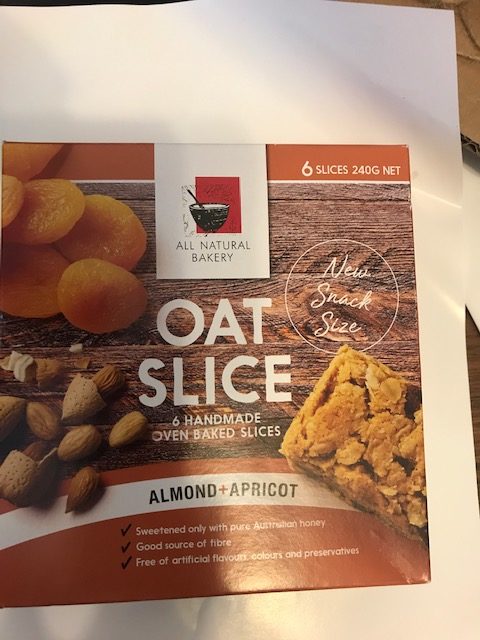
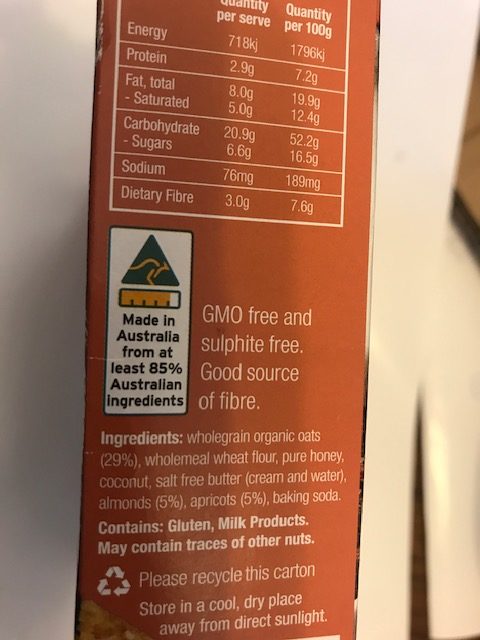
Ingredients:
Wholegrain organic oats
Wholemeal wheat flour
Pure honey
Coconut
Salt free butter (cream and water)
Almonds
Apricots
Baking soda
GMO and sulphite free.
ANSWER:
My first question with this product would have been does the coconut and apricots contain sulphites (preservatives)? It isn’t clear in the ingredients list. However, if you look on the other parts of the packaging, the packaging clearly states that the ingredients are sulphite free.
These look like a great product and I will keep an eye out for them.
Hallelujah a natural home baked product appearing on supermarket shelves?!
Category:
Product Questions
Interestingly though the picture of the apricots on the front are the orange/sulphur kind so not helping the perception of what real food should actually look like
Leave a Reply
QUESTION:
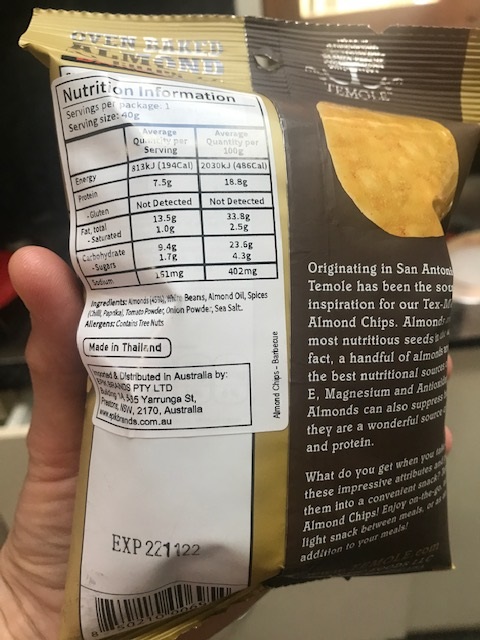
Are these almond chips a good choice? Ingredients seem fairly clean (although some powders) but not sure how they are processed?
ANSWER:
Ingredients: Almonds, beans, almond oil, spices (chilli, paprika, tomato powder, onion powder); Sea Salt
Yes these almond chips look to be a good choice. 99% of the time when I have questioned spices and powders, they are generally the real deal. The item is usually dried and ground. Looks like a nice snack 🙂
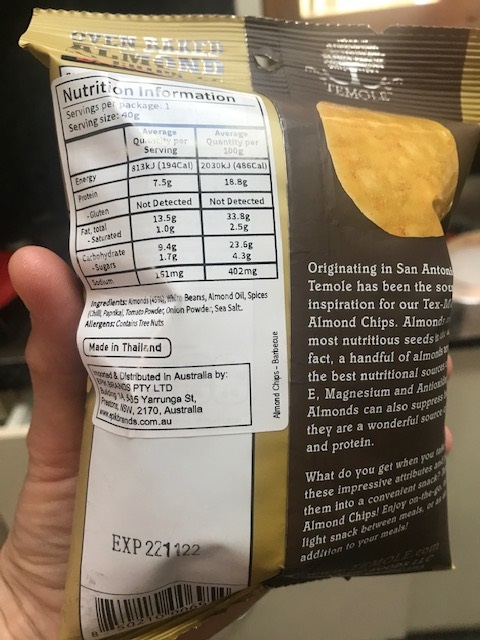
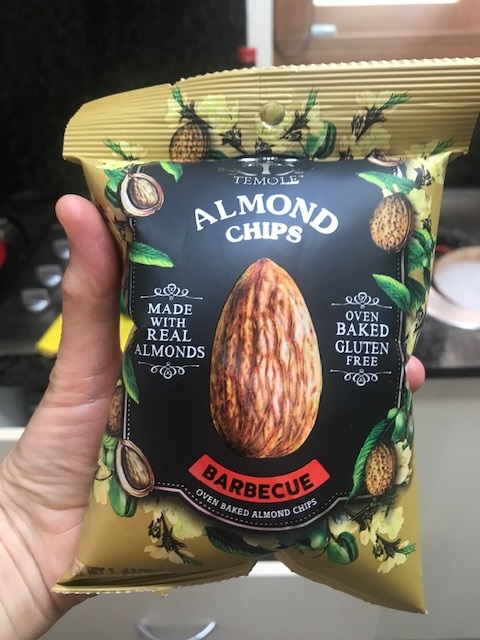
Category:
Product Questions
Leave a Reply
QUESTION:
I thought I’d found a good additive free bacon from Cherry Tree Organics. There’s one ingredient that I’m not sure of – plant based cure? What’s your opinion on this ingredient?
ANSWER:
The description is not detailed enough for me. My immediate reaction is that it isn’t real food, or it is a highly processed ingredient. I have reached out to Cherry Tree Organics to find out more. I will update here as soon as I hear back.
Category:
Product Questions
Thanks for checking – I hope they reply
Leave a Reply
QUESTION:
Please review this honeycomb for the lollies product review.
ANSWER:
I have reviewed this product and added it to the product database.
This product has
- 4 ingredients
- 1 highly processed
and receives a “BETTER” rating.
Category:
Product Questions
Leave a Reply
If you have emailed them through we will include in the review.
Category:
Product Questions
Leave a Reply
Unfortunately I am unable to recommend a particular chocolate sauce. I would need to conduct a product review of multiple options to see which is a better alternative for you. Make sure you list this an option to review for future reviews!
Chocolate sauce is super easy to make your own too!
Category:
Product Questions
Leave a Reply
QUESTION:
What is palm oil and why is it not a good option for us? Is sustainable and segregated certified palm oil a better option?
ANSWER:
Palm oil is a bit controversial – both from a health and environmental perspective.
Palm oil comes from the fruit grown on the African oil palm tree. These trees are now also grown in Asia, North America and South America due to increased demand for the oil.
Palm oil has a high saturated fat content. This is thought to be harmful to cardiovascular health. However, some studies have found that if palm oil is consumed in a balanced diet there should be little incremental risk.
Environmentally the concern is deforestation…
Forests are burned to clear area where oil palms can be grown.
Once the trees grow too high and unable to reach the fruit, they are cut down to make space for new trees. This contributes to deforestation of the rainforest. Due to the increased high demand for this cheap oil, acres of rainforest are cut down. This results in loss of animal habitat for endangered species such as orangutans. It is estimated that we have lost over 100,000 orang-utans in the last 16 years as a result of these practices).
It is believed that converting rainforest into plantations also contributes to climate change as it results in higher amounts of carbon emissions being released.
To lessen the impact, sustainable and segregated certified palm oil is a better option.
Category:
Product Questions
Leave a Reply
QUESTION:
Dried figs – if the ingredients say 100% dried figs could it still likely cause problems from processing aids etc.
ANSWER:
Processing aids do not need to be declared.
As a consumer you don’t have transparency in knowing whether they have been applied. Manufacturers often don’t want to divulge this information also. Manufacturers that are very happy and proud of their products are.
I recommend that you find local sources of these items so that you can ask the questions directly to be 100% sure.
Category:
Product Questions
Leave a Reply
QUESTION:
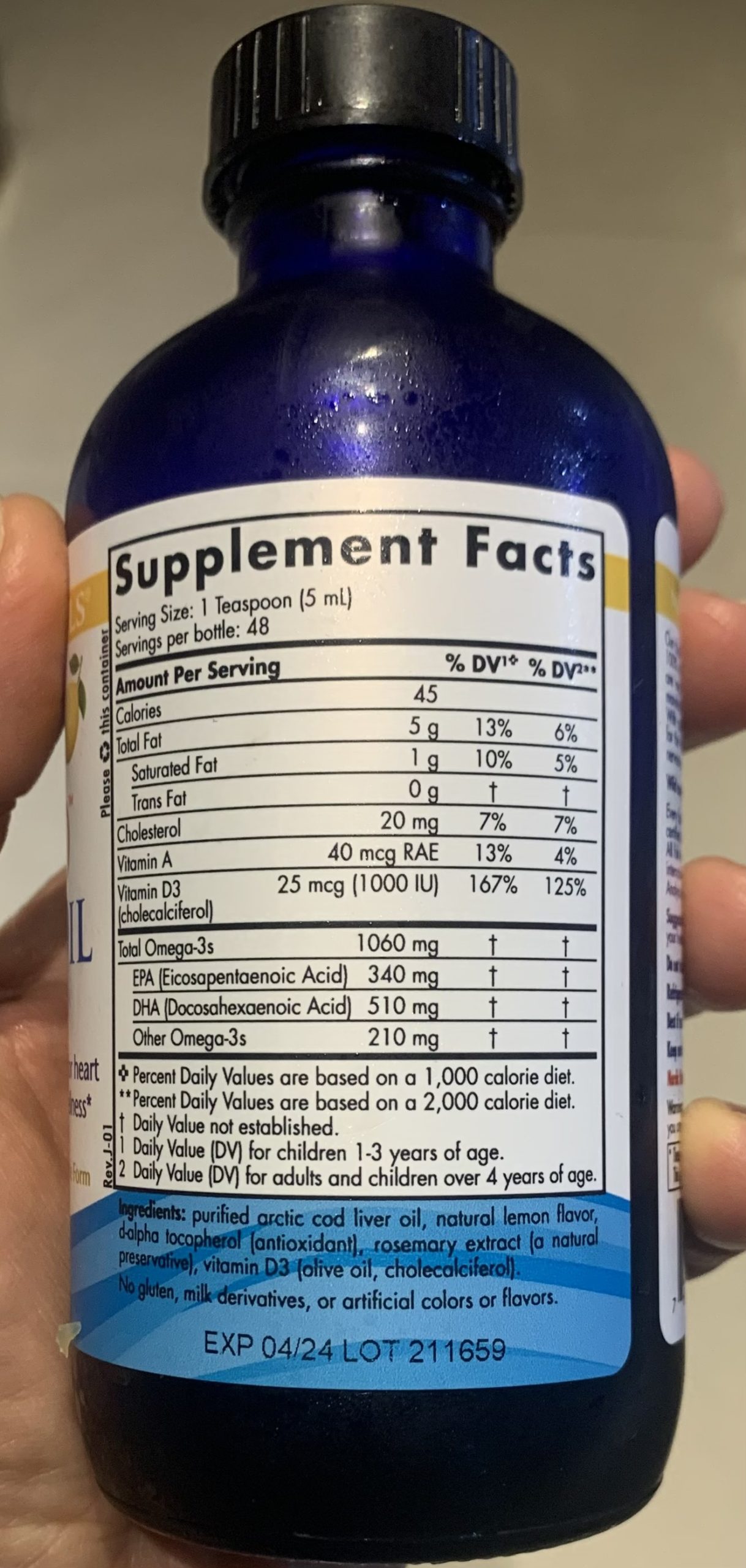
Fish oil – contains additives?! I was recommended a very good brand of fish oil for my kids by paediatrician. Nordic Natural Cod Liver Oil. It is only recently I noticed that it has additives, for example rosemary extract.
Do you give fish oil to your children and do you know of any fish oil without additives.

ANSWER:
Yes you are correct! And many multi vitamins do also…
In this example you have flavours as well as rosemary extract.
I do not give my kids fish oil or any other multi vitamins. Even if there aren’t additives in the content of the product, usually they are in the capsules that it comes in and we react to the colouring in the capsules or the capsule itself.
Usually it would be hard to find unflavoured fish oil liquid as it wouldn’t taste good!
I haven’t done a review of fish oils to know if there is one available that would be additive free. You can suggest as a product to review in the future?
Category:
Product Questions
Leave a Reply
QUESTION:
Do you have a go to supermarket available snack? Or an online available lolly you recommend.
ANSWER:
I recommend that you vote for a category of snacks to be reviewed so that this can be reviewed for you properly (too broad a topic) or you can request a particular product to be reviewed.
In short, snacks available in the supermarket are very expensive when you have a large family, so most of our snacks are made at home.
If you would like specific advice on multiple products for your family and would prefer to move faster, you are able to book in fast track consult, just email me to organise.
I am yet to come across a lolly that I would be happy to give to my kids. Plenty of chocolate options, but not lollies.
Category:
Product Questions
Leave a Reply
QUESTION:
What are your thoughts on Apple fibre powder? The pack says its 100% apple fibre powder, safe to use?
Or there could be some hidden processes that make it not safe for us. I consider using it in baking. Thanks!
ANSWER:
I think the answer would be dependent on which manufacturer has made this product. In theory, it is possible for it to be a natural product, by removing the juice from the flesh and skin and pressing so that the pectin and flavours remain. Personally I prefer to use foods in their whole food state rather than isolated. For example, I would rather use apple sauce than isolated apple fibre. It is a clever tactic by manufacturers to be able to use this ingredient as a low cost bulking agent and to replace or supplement more expensive fruit ingredients (such as apple sauce).
Category:
Product Questions
Pectin – do you avoid? I buy jam with just sugar and fruit but most have pectin also (which means I put them back)
-
Ideally yes I do avoid. However, it is quite difficult to buy jam from a supermarket without it. Best place is to visit your local farmers markets for real jam without pectin.
Leave a Reply
QUESTION:
Not sure how new this product is, but interested in your review of this product – Lentil Bites.
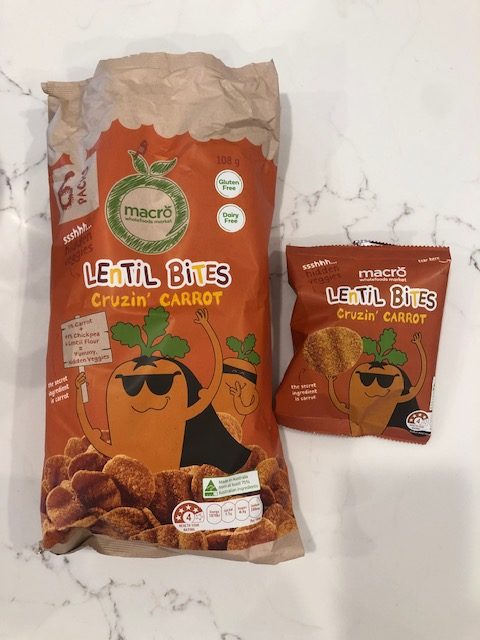
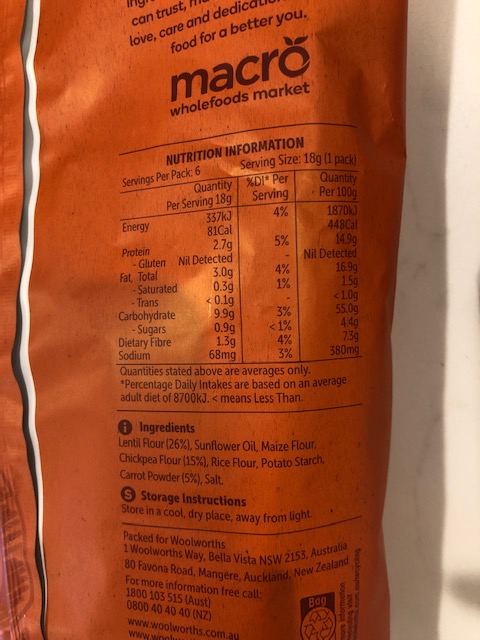
Ingredients: Lentil flour, Sunflower oil, maize flour, chickpea flour, rice flour, potato starch, carrot powder, salt.
ANSWER:
Overall this product isn’t bad. I would want to confirm the sunflower oil to make sure that it doesn’t have any undeclared antioxidants (this is the biggest risk from an additive perspective). Potato starch is a highly processed product. Otherwise, providing the oil is ok I would be happy to use this as an occasional snack.
Category:
Product Questions
Leave a Reply
QUESTION:
What are your thoughts on copha?
ANSWER:
The ingredients of copha is:
Hydrogenated Coconut Oil (99%), Soybean Lecithin
I recommend avoiding any ingredients that are hydrogenated and prefer to avoid lecithin also. I would look to substitute pure coconut oil for copha instead.
Category:
Product Questions
Leave a Reply
QUESTION:
Do you have a supermarket available lollipop you’d recommend? The 100% honey pops?
ANSWER:
At this point in time, no I don’t. A lot of honey lollipops say that they are 100%, but when you flip the packet, you will see glucose and other ingredients added. If its 100% honey, these are the best you can get.
Category:
Product Questions
Leave a Reply
QUESTION:
Is this the same product or are they different? If they are different can you explain why. Thanks
ANSWER:
My understanding is that gelatin and gelatine are the same.
Category:
Product Questions
Leave a Reply
QUESTION:
Can you review frozen chips.
ANSWER:
At the end of each month the Additive Free Advocates are asked collectively what they would like reviewed. This poll is conducted in the Additive Free Advocates facebook group. Head over there and place your vote for the next product review.
Category:
Product Questions
Leave a Reply
QUESTION:
The fruit bars that say 100% fruit are they ok?
ANSWER:
It depends…some are true to their word and the ingredients list marries up to the marketing claims on the front of the pack. Others, claim 100% and when you flip the packet, you will see its 99% real fruit and flavours or citric acid or the like.
Perhaps we could do a review of these so I can delve into them deeper for you and ask manufacturers questions about them.
Category:
Product Questions
Thanks, I meant the one’s that the ingredients list only lists fruit and nothing else – I don’t buy them if other ingredients are listed, but I wonder if there are other ingredients there that aren’t listed
Leave a Reply
QUESTION:
Can you take a look at the ingredients in Yakult drinks fro me please?
ANSWER:
Ingredients:
Water, Skim Milk Powder (reconstituted), sugar, dextrose, flavouring, L. Casei Shirota strain.
Personally I am not a fan and wouldn’t consume this product, due to the skim milk powder, dextrose and flavouring. On the one hand you are building up your gut health yet potentially at the same time destroying it with flavours.
I would prefer to have other alternatives without the additives.
Also, in my experience most of us that are sensitive to additives have issues with gut health. I would seek a qualified professionals opinion whether this strain of bacteria is what I personally need. Every person is different and their balance of bacteria is different. It may be beneficial for some and detrimental for others.
Category:
Product Questions
Leave a Reply
QUESTION:
What rating would you give Ceres Organics Original Bircher Muesli. Ingredients are clean, though made in NZ from imported ingredients (from Canada, US, China, Chile, India, Sri Lanka). I wonder what the processing would tell us?
ANSWER:
The ingredients are:
Oats*, Raisins*, Sunflower Seeds*, Dried Apples*, Hulled Sesame Seeds*, Linseeds* (Flaxseeds*), Dried Bananas* (*Certified Organic)
On face value, it would be rated as BEST. I would want to see more information on the raisins and dried bananas though. They will often also contain oil (and therefore could contain undeclared antioxidants).
If you are able to send through some images of this product that you have taken, we can upload this into the Supermarket Shopping database.
Category:
Product Questions
Leave a Reply
QUESTION:
My kids love bbq sauce and I don’t have time for a scratch made version. What brand would you recommend? Dianne
ANSWER:
I haven’t completed a review of all BBQ sauces to know if there is one on the market that I could recommend. Personally, I haven’t bought one in many many years and make it from scratch on the rare occasion I use it. Perhaps the next product review can be BBQ Sauce?
Category:
Product Questions
Leave a Reply
QUESTION:
YoPro Yoghurt It makes the claim to have no preservatives or artificial flavors. What do you think?
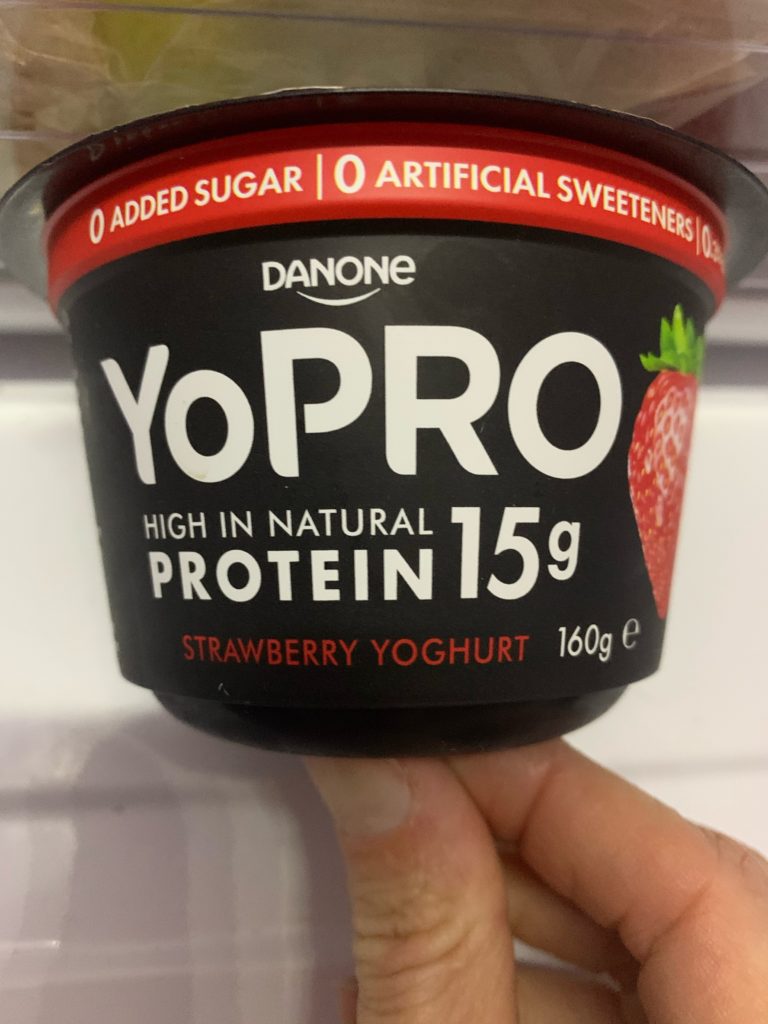
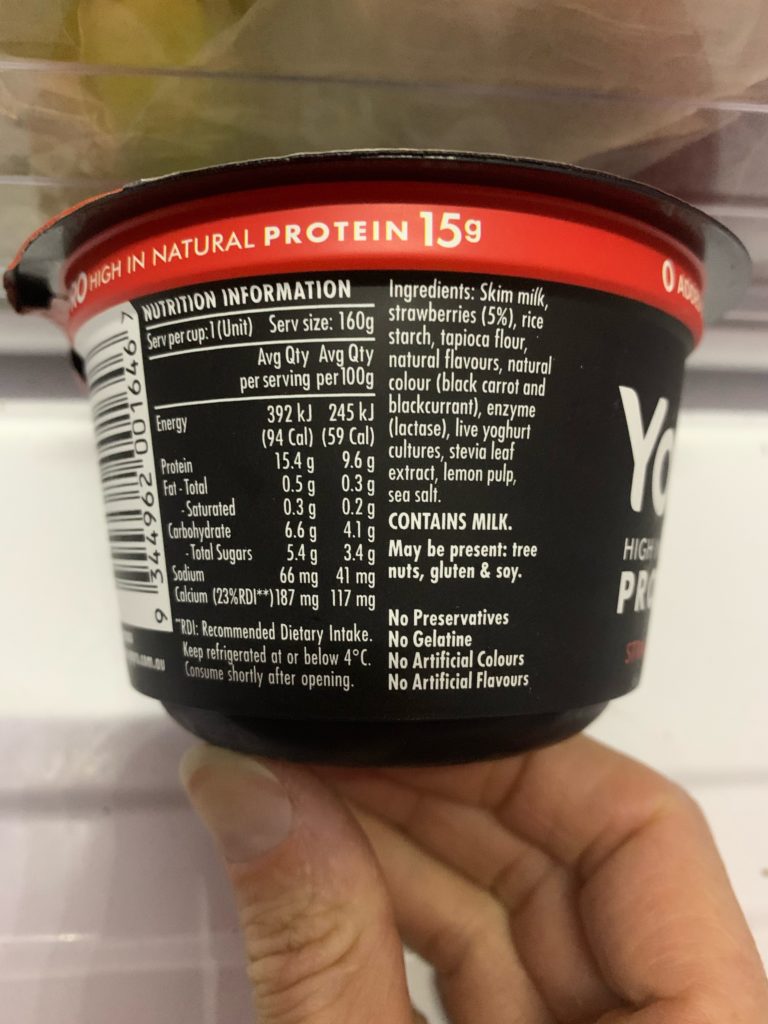
ANSWER:
Thank you for sending this through.
You will often see claims of “No artificial …” In this instance the claim is no preservatives, no gelatine, no artificial colours and no artificial flavours.
What does this product have:
Natural flavours
Natural colours
The product would appear to be correct in claiming no preservatives and no gelatine. However, even though there aren’t “artificial” colours or flavours, they still contain “natural”. We know that the natural counterparts are no better than the artificial ones. I have written a blog post on this topic which explains this in more detail:
https://www.additivefreekids.com.au/what-are-natural-flavours-and-should-you-avoid-them/
So technically, their claims are correct. However, I do not recommend natural colours or flavours either.
Hope that helps!
Category:
Product Questions
Leave a Reply
QUESTION:
I use these breadcrumbs a lot in cooking for my kids. Ingredient list has one ingredient- brown rice flour. But they often smell rancid when I open a new pack. And they have crunchy texture. Do you know how they might be processed to get that crunchy texture? Any potential harmful additives used in processing? Thank you.
ANSWER:
Great question! I have contacted them with the query and will update this FAQ when I hear back.
Update:
“To produce Orgran Crispi Crumbs Rice Breadcrumbs, white rice flour rice is mixed with rice bran to create a ‘preblend’.
This preblend is then mixed with potable water and passed through an extruder at extremely high heat and pressure.
This creates rice puffs which are passed through a conveyor oven to reduce the product to the required moisture content.
These rice puffs are then milled into crumbs.
There are no other additives or processing aids used to produce this product.
I can confirm that we do not flush the packaging of any Orgran products with gas.”
Category:
Product Questions
Thanks so much, Frankie. Based on this answer, would you use this product for your family?
Leave a Reply
QUESTION:
If ingredients list says herbs and spices is that likely to contain hidden additives?
ANSWER:
It depends on the manufacturer, unfortunately there isn’t a blanket rule. It’s something that needs to be checked on a product by product basis.
Manufacturers that are transparent know that their customers want to see this information and will individually list each herb and spice used (as long as the info isn’t sensitive). Not all manufacturers want to display their trade recipes and special herbs and spices though!
Category:
Product Questions
Leave a Reply
QUESTION:
Can you please review this bread and add it to the database?
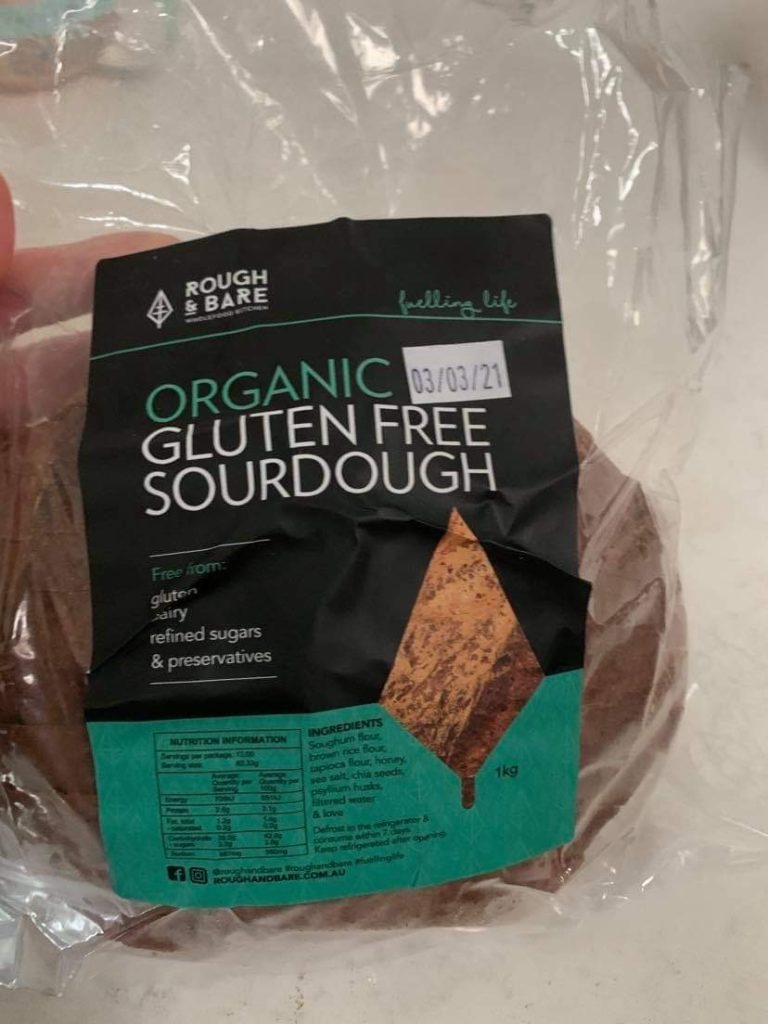
ANSWER:
Sure! It ranks as one of the BEST. Great work in finding an amazing gluten free sourdough! We will get it into the database soon.
Category:
Product Questions
I bought it in Sydney, Mona Vale, in the Wholefoods cafe Rough & Bare: https://barewholefoods.com.au/cafe-mona-vale/. I like the taste, closest to white bread taste you can find I think.
Awesome! May I ask where you purchased this from and how does it taste?
Leave a Reply
QUESTION:
What ranking would you give the plain and broccoli and kale gluten free wraps sold by GF Precinct. Is this a good GF option?

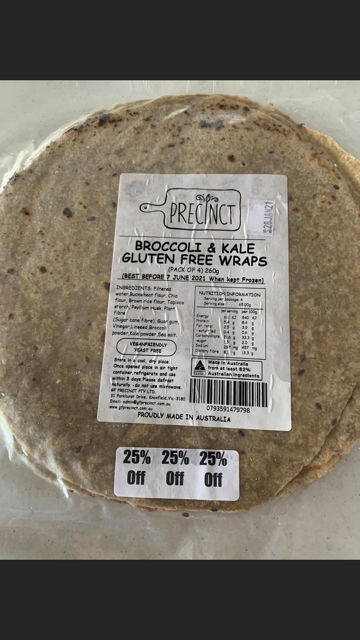
ANSWER:
I would give this wrap a “Better” ranking. It can be very difficult to find gluten free wraps in the “Best” category! This product will be uploaded into the Shopping Database – great work in finding a better alternative!
Category:
Product Questions
Leave a Reply
QUESTION:
I follow a low carb diet. Was wondering your thoughts on konjac flour which is found in low carb noodles and pasta? Thanks
ANSWER:
I haven’t conducted an in depth review on Konjac flour to date. I expect (as it usually the case) that they aren’t all created equally. Some will literally be the Konjac root crushed, ground and sieved. Others will have colour fixing or preservatives added (calcium hydroxide). I would need to confirm with individual manufacturers.
There is debate whether this is a food or a supplement and recommendations I have seen is that it should be eaten occasionally (if you are aren’t considering from an additive perspective). Hope that helps?!
Category:
Product Questions
Leave a Reply
QUESTION:
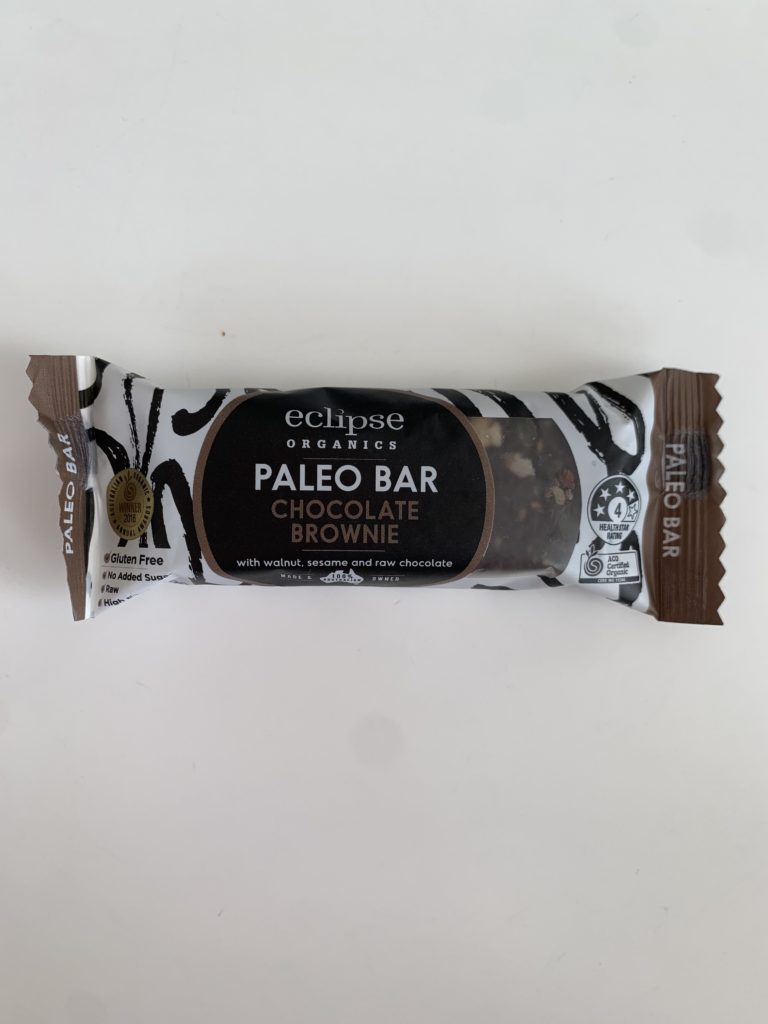
Eclipse organic paleo bars – can you please review and add them to the shopping database with your rankings.

ANSWER:
I forgot about some of these muesli bars! I found them in my Supa IGA work. This is a beauty and ranks as BEST. It will be added to the supermarket shopping database soon 🙂 Great work!
Category:
Product Questions
Leave a Reply
QUESTION:
What is your recommendation for sweetening baking – sugar, honey, maple syrup (proper not fake)? Something else?
ANSWER:
My preferred approach might not suit others. We are all different.
At times I have undertaken experiments with the family and been sugar free (to heal).
I have found with my kids, that sugar doesn’t impact them significantly (if it is just sugar and no additives). They will have increased energy levels that burns off fairly quickly.
So with that being said, my preferences are for natural options (or close to). I have always used sugar (rapadura, coconut), honey and maple. I prefer to purchase my honey from local sources so that I know it hasn’t undergone too much processing and maple syrup is always 100%.
I understand that sugar is highly addictive. However, I feel that it is a lot easier to move kids to additive free if you are able to bake sweet treats. Over time you can slowly reduce the sugar / sweetness load.
Hope that helps!
Category:
Product Questions
Leave a Reply
QUESTION:
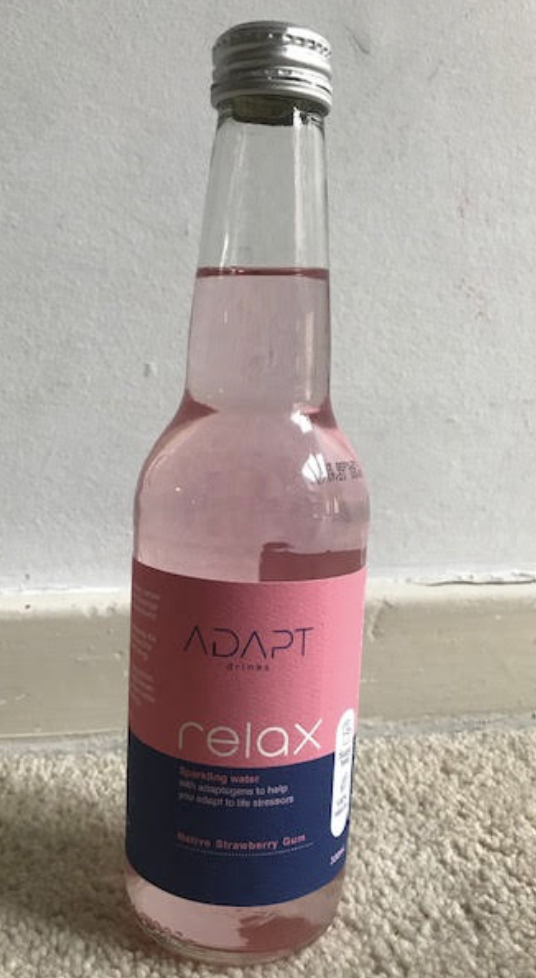
I’d be grateful for your thoughts on ‘Adapt’. It is a new adaptogenic drink recently released by Nicole Avery of ‘planned and present’. I love Nicole’s work and blog, and made an initial order to show my support to get her venture up and going. I like the taste but know very little about adaptogens and am wondering what you think to help me work out whether it could be an everyday drink or just a sometimes drink. Thank you!

ANSWER:
I will start of by saying that I also know very little about adaptogens and can only look at the ingredients at face value. However, I know that the functional beverage market is very popular at the moment and hence there will be a lot of brands trying to make their way through.
My thoughts on this product is that there are a lot of extracts! In my experience, extracts are usually bad news. You can’t tell for sure looking at the label, I would need to discuss with her, if she knows how the herbs have been extracted (usually manufacturers don’t, they are sold a story that they are all natural). Usually, harsh chemicals are used in the process.
Monkfruit juice (from concentrate) – as you will see in February’s Muesli Bar Review, concentrates and purees often contain additional ingredients or processing aids (that aren’t declared).
The other worrying ingredient is Rosemary extract. Rosemary extract sounds very natural. It is known to be a clean label ingredient for the antioxidant BHA and BHT (also known as 320 and 321). These antioxidants are known to cause asthma, insomnia, fatigue, hives, aggressive behaviour, migraines and is a suspected carcinogen.
Rosemary extract has had huge growth in healthier food products. It does provide a preservative function and at the same time gives consumers a false sense of security as it is perceived as natural.
So, to sum up, I would avoid this drink on that one ingredient alone (rosemary extract).
Category:
Product Questions
Leave a Reply
QUESTION:
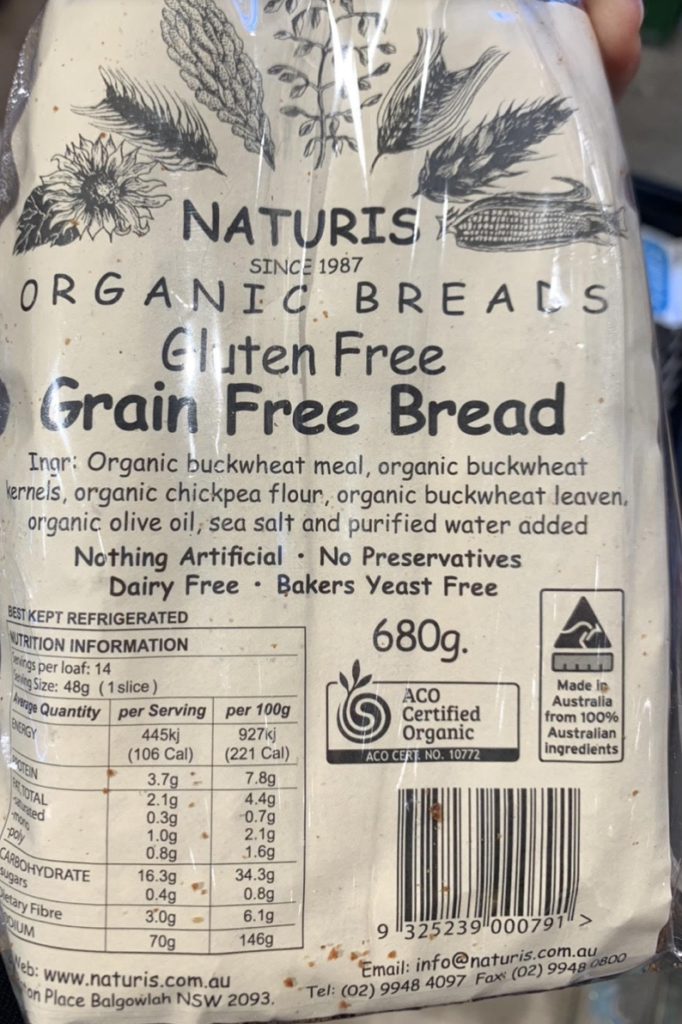
This bread is very similar to their buckwheat bread but has olive oil instead of sunflower oil. Also, I contacted the company about their leaven and here’s their response: “We make our own organic buckwheat leaven which is mixture of organic buckwheat flour and purified water.” Looks very clean to me. Would you rate it Best?
ANSWER:
Great work, this is ranked as BEST, very clean! I will upload it into the product database for you.
Category:
Product Questions
Leave a Reply
QUESTION:
Which salt is safe to use?
ANSWER:
My preference is stay away from iodised salt and refined salts. If possible to choose local salt.
There are two that I have reviewed in detail and that stands out in terms of being hand harvested, sun dried naturally and lovely flavour – the first you can find it here.
If you are very keen on an iodised salt, I would use this one instead – you can find it here. Similarly this one is hand mined straight from the source without refining, bleaching or anti caking agents added.
Salt is a concentrated store of natural mineral nutrients and the less refining it has been through the better!
If you are looking for other recommendations, I would need to do a detailed review to be able to offer other suggested alternatives. Hope that helps!
Category:
Product Questions
Curious to know why Pink Lake Salt (TWC) does not have AFK Approved label on the weblink??
-
It takes a lot of time to receive and review the information for each product. For new products, they will be listed on the website without my approval until I have satisfied myself that I am happy with all the information. If I am not happy, it won’t receive the endorsement symbol in the future. I have looked up this product, in this instance we are waiting for information. Hope that helps explain it x
Leave a Reply
QUESTION:
Coffee – what type do you recommend at home – (no coffee machine) – plunger? Instant? Bags? Organic instant? I seem to get skin reactions from coffee at home but not at cafe’s and I’m not sure why. The milk doesn’t seem to make a difference as I have it in cereal too and it’s only when I have the coffees that it seems to be a problem.
ANSWER:
I will start this answer by saying that:
a) I am not a coffee drinker
b) I haven’t conducted a detailed review on coffee before (perhaps one for the the future)?
However, one of my sons has just taken an interest in coffee. Without having spent any time researching it, my first instinct was to go as close to the sources possible. Ie, purchasing organic coffee beans myself and grinding them. Some of the IGA supermarkets have grinders in store.
I would then use these ground beans in one of these (they are quite inexpensive). The ground beans are put at the bottom and packed tight, and submerged in water. This percolates up int the top compartment.
This will be the closest process and taste to what you would receive in a coffee shop. The beans are roasted often on site. There isn’t any extra packaging or processing aids.
My second preference would be to buy ground, organic coffee beans, and again make the coffee in the same way.
I find that the use of this little machine slows down the consumption of coffee in the household too. The instant coffees I feel are too highly processed (but haven’t examined them fully yet).
Which coffee are you using at home? Perhaps we can narrow down the reaction a little more.
It would be great to hear the other Advocates approach and what they do!

Category:
Product Questions
I’ve tried a lot of different coffee’s at home. The Robert Timms bags I react to, plunger coffee (non organic), organic instant coffee, organic decaf instant. Sounds like I need to try organic beans/ground. Thanks ☺️
-
Let me know how you go x
Leave a Reply
QUESTION:
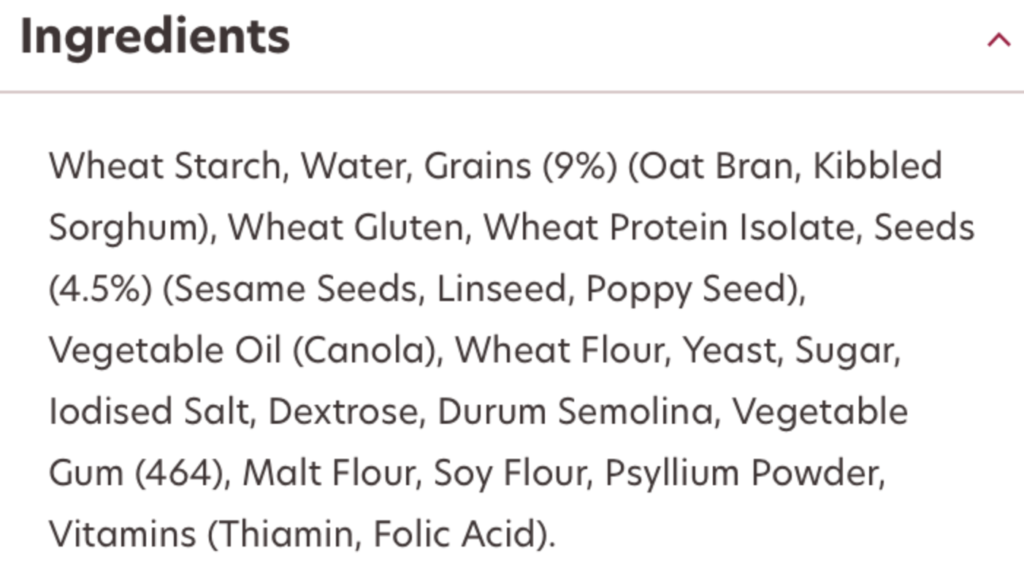
Could you please have a look at the ingredients for a Bakers Delight Wholegrain LowFOD block loaf? Would this one be in your avoid list or is it ok? They don’t have the ingredients on the packet but I found the below information on their website:
ANSWER:
This Bread ranks as AVOID. We can include in the Supermarket Shopping Database if you are able to take a photo of it.
Category:
Product Questions
Leave a Reply
QUESTION:
Ceres Organic Crispy Rice Crackers (Sea Salt) . Please review them and add to the portal.
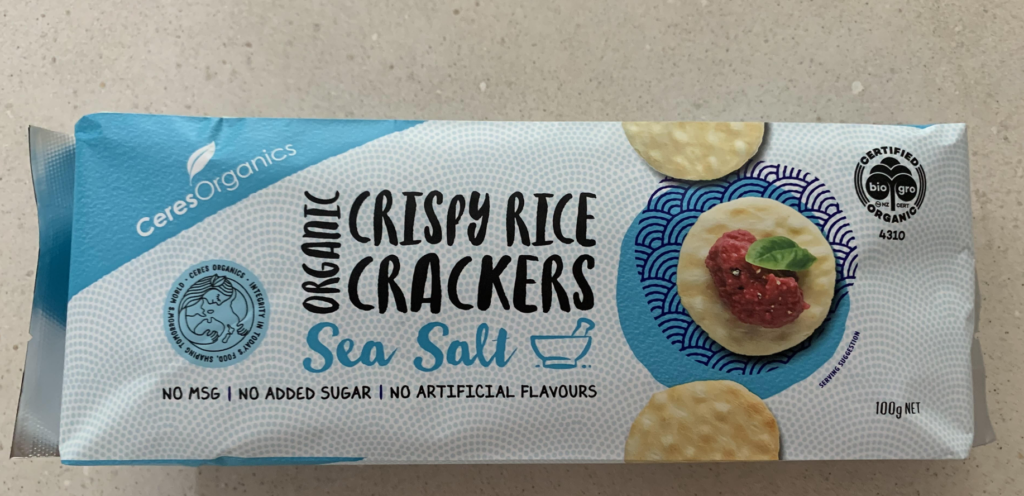
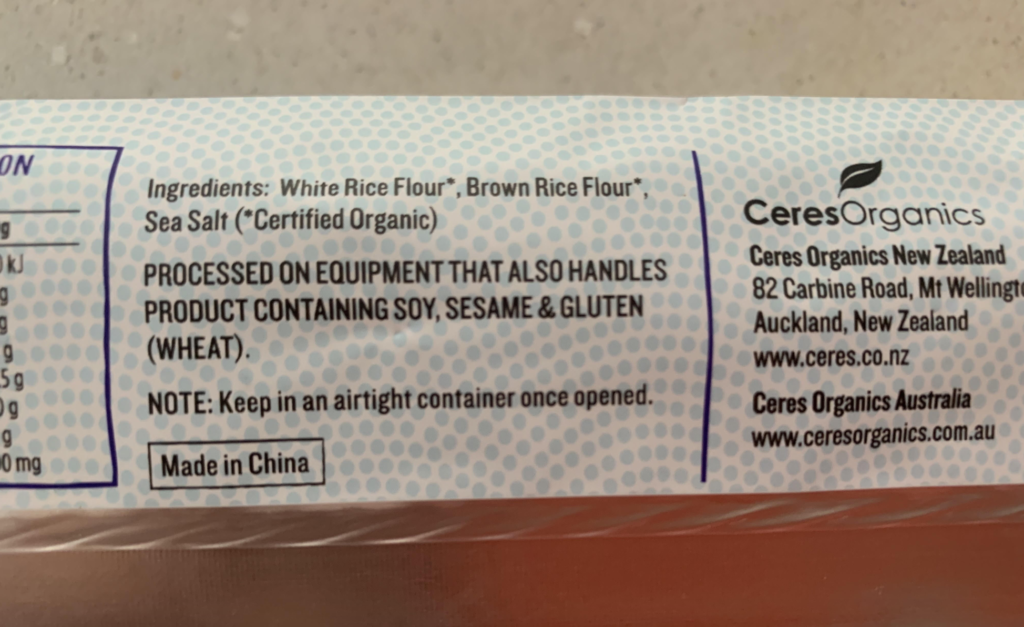
ANSWER:
Ceres Organic crackers can be a little tricky if oil is included. There is no oil in these which are great. These are ranked BEST and will be added to the Supermarket Shopping Database.
Category:
Product Questions
Leave a Reply
QUESTION:
Frozen Fruit- is it additive free? I buy organic frozen blueberries and recently I bought frozen dragon fruit and was just wondering if these are additive free?
ANSWER:
I haven’t done a detailed review on frozen fruits. However, generally speaking they would be considered low risk (if anything perhaps processing aids may have been used).
I regularly buy organic frozen fruit. Frozen fruits and veggies are a great way to avoid additives. Just double check where they were grown. Some are from China and come through the back door via New Zealand.
Category:
Product Questions
Leave a Reply
QUESTION:
Durum Wheat Semolina – Good or Bad – What is it What is Durum Wheat Semolina?
ANSWER:
There are two most popular forms of wheat – durum wheat and whole wheat.
Durum wheat is a spring wheat that is usually ground into semolina and used to make pasta. It can also be ground finer to make bread or pizza dough. Durum wheat is harder than bread wheat. More grinding is needed to create flour, which damages the starch content. This makes it hard to use for bread as the starch is needed for fermentation so that it can rise.
Whole wheat is wheat that has its bran, germ and endosperm still intact. This makes it nutrient rich in comparison to refined wheat. It is more elastic and lends itself to baking better.
From an additive perspective, generally speaking, it is good.
Category:
Product Questions
Leave a Reply
QUESTION:
Is it significantly better to use fresh garlic over a jar of clean, organic, minced and preservative free garlic? Are the health benefits majorly better? Spiral Organics do a jar of minced garlic with ingredients listed as “organic garlic (90%), organic vinegar”. Would this be okay to use?
ANSWER:
I will preface this by saying that I haven’t conducted a detail review of minced garlic to date. I personally prefer to use fresh garlic cloves, or if I want a more convenient option, I will use powder over minced garlic (but then you lose the punchiness). Nothing tastes better than fresh garlic in my opinion.
Most of the time, it is very hard to find pre minced garlic that does not come with additives (usually citric acid at a minimum). Often manufacturers of minced garlic will use stabilisation techniques that include pasteurising the garlic. That is, they heat it to ensure any micro-organisms are killed. I prefer my garlic not pasteurised.
The other big question I would have is where is the garlic sourced from originally. Imported garlic is often fumigated with methyl bromide and bleached. For me there are too many unknowns, so I prefer to use fresh garlic.
I have taken a look at the Spiral Organics option here and it states that the garlic is imported. I personally wouldn’t buy it. Hope that helps!
Category:
Product Questions
Leave a Reply
QUESTION:
Garlic/Onion Powder I would like to know if all garlic/onion powders are made the same. How are they typically processed? Most have only garlic or onion (100%) as their ingredient but are they truly additive free? I usually use fresh garlic/onion but in some cases powder comes in handy.
ANSWER:
These powders are usually air dried, dehydrated or free dried. Once the water has been removed they can be crushed into appropriate sizes such as flakes, granules or powder.
In theory, onion and garlic powder should be low risk. Now manufacturers use processing aids (and don’t need to declare them), I can’t tell you for sure without confirmation from manufacturers whether they are ok for sure. It would be dependent on the brand and the manufacturer.
The biggest risk is using a Garlic seasoning – this isn’t just garlic and often contains main other additives.
Category:
Product Questions
Leave a Reply
QUESTION:
Can you please add the Cape Grim Bone Broth to the Supermarket Shopping Database with your ranking?
ANSWER:
This has now been added to the database. At the time of entry, it has been ranked as BETTER. I have queried the manufacturer on a couple of ingredients. Depending on their answer, this ranking could change to BEST.
Update 27th November 2020
Manufacturer has confirmed to me the ingredients to me. I will change the ranking to BEST as a result of their confirmation.
Category:
Product Questions
Leave a Reply
QUESTION:
I’m still on the search for a “BEST” category bread. that I can easily access in my area. None of the “BEST” breads in the product review seem to be in the shops near me. Wondering how this one would rate?

ANSWER:
This has now been updated in the Supermarket Shopping Database and at the time of publishing was rated “BEST”. Great work!
Category:
Product Questions
Leave a Reply
Question:
After CoYo’s recent ingredient change I’m on a hunt for the BEST organic coconut yoghurt option (if any). Can you please kindly review the ingredients (unsure what cultures they use?) and give a rating for Coles Organic Coconut Yoghurt? I will send you photos. Thank you!
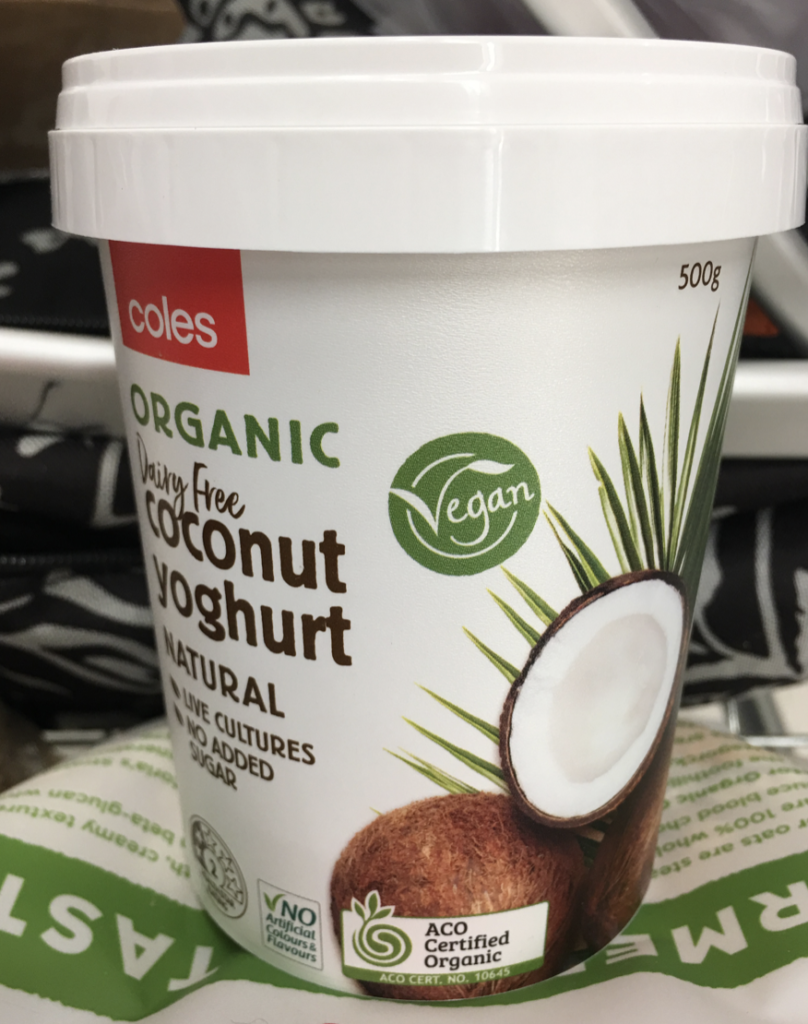

Answer:
I have reviewed the yoghurt, it has come out as Better and have uploaded it into the Supermarket Shopping Database.
Category:
Product Questions
Yea unfortunately Bondi doesn’t have any stockist in Brisbane 🙁
Rhonda, do you have access to Bondi coconut yoghurt? It is ranked the best in the database. Thanks for adding the Coles organic yoghurt, I was also going through other options since Coyo added that extra ingredient.
Thanks Frankie! I’m interested to know why this has been rated as Better not Best. What is the suspicious ingredient?
Leave a Reply
Question:
This is the gluten free bread recommended on the failsafe elimination diet as it is free of preservatives. I wondered your opinion on it and how you would rank it?
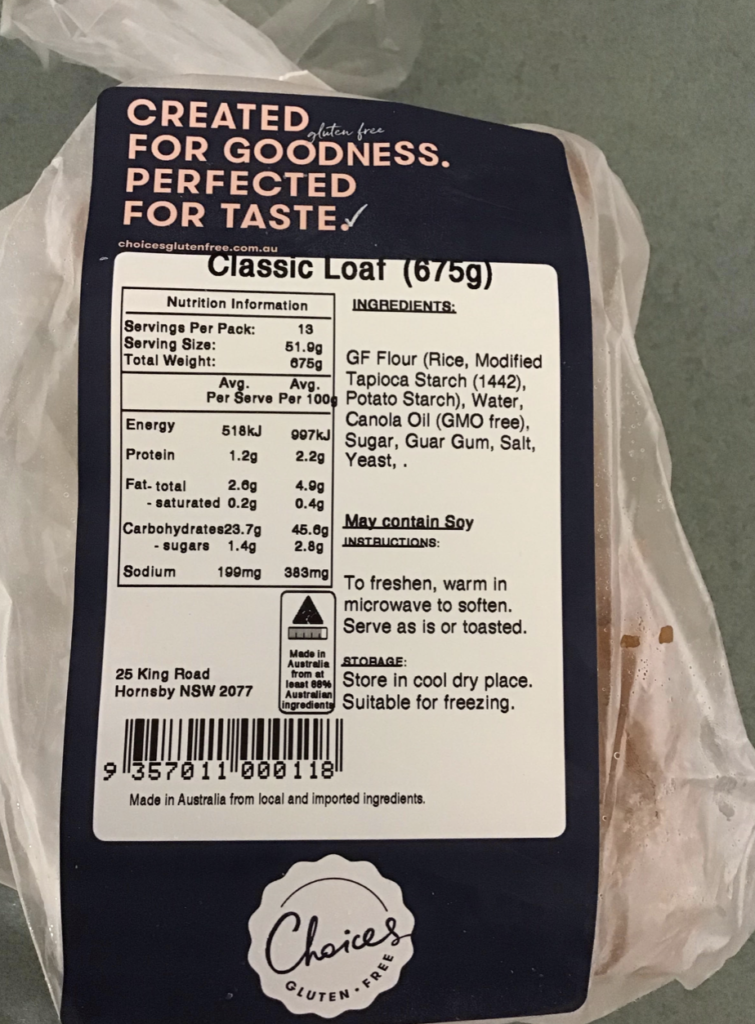
Answer:
Thanks Alicia for sending this through. The ranking comes out as “OK” due to 2 highly processed ingredients and two additives (guar gum and modified tapioca starch). I will pop it into the supermarket shopping database.
Category:
Product Questions
Leave a Reply
Question:
I discovered this product – wondering and the whole family loves it. Interested to know if it’s “clean”?
https://www.allaboutorganicsonline.com.au/product/simply-organic-classic-fajita-simmer-sauce-227g/
Answer:
It looks pretty clean! Very rare to find ready made sauces such as these.
Not a fan of the canola oil, but otherwise it looks great. Great find!
Category:
Product Questions
Leave a Reply
Question:
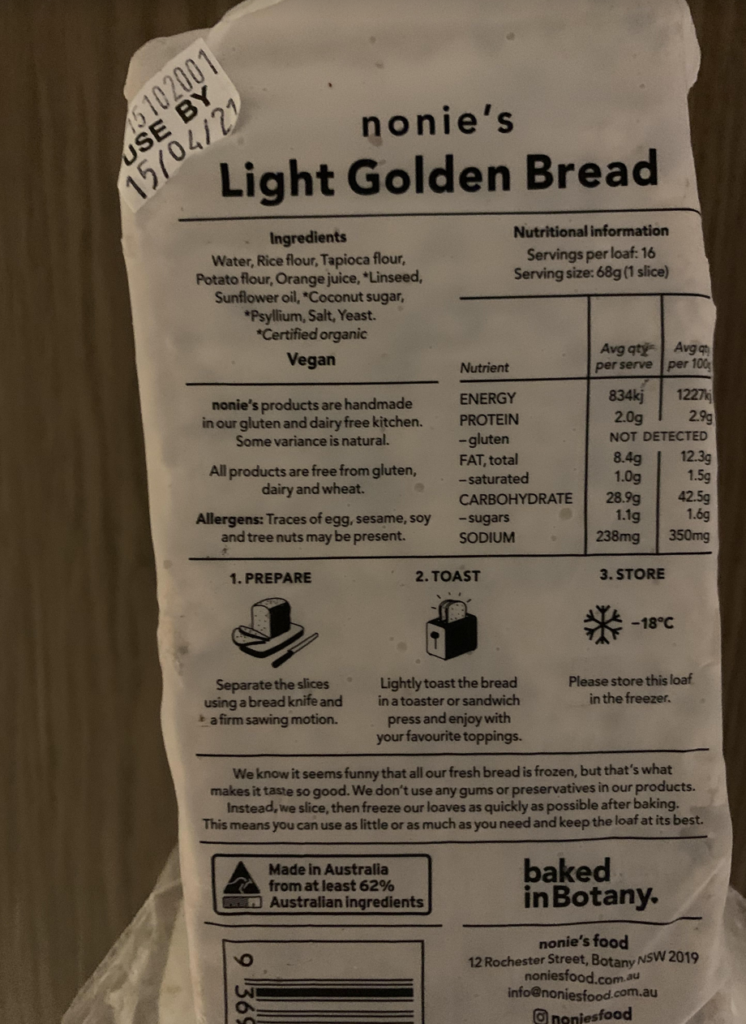
Can you please include this bread in the Supermarket Shopping Database with your ranking?

ANSWER:
This will now be included in the Supermarket Shopping Database with a ranking of “BETTER”
Category:
Product Questions
I buy it in Sydney. It is sold frozen only. Apparently, they bake it and freeze it straight away. The BB date is for frozen product.
Do you know where this can be purchased from? Interesting that the best before date is in April 2021! Is that a typo?? There aren’t any preservatives in this…
-
You can visit their website for more details https://noniesfood.com.au
Yes very interesting indeed…it is worth a question to them how it can keep – perhaps they are vacuum packed? Otherwise, would look into Modified Atmosphere Packaging that could assist with a long shelf life (and no impact on ingredients).
Leave a Reply
Question:
Honey- are they all the same? As long as honey is the only ingredient are they all roughly equal?
Answer:
No they aren’t all the same. There is a difference between raw honey and processed honey.
Raw honey = honey is extracted from the honeycombs by pouring it over a mesh or cloth to filter the honey from impurities (ie bees wax etc). Once it is strained it is ready to be bottled. Raw honey has amazing antiviral and antibacterial properties, stabilises blood sugar, promotes digestive health, boosts immunity and can also help heal skin conditions.
Honey = usually goes through pasteurisation and ultrafiltration.
The pasteurisation process destroys the yeast found in honey by applying high heat. This also helps extend the shelf life and make it smoother. Ultrafiltration further refines the honey to make it transparent and smooth, and it can also remove beneficial nutrients like pollen and antioxidants.
Ultra processed / filtered honey contains little or no pollen, sometimes can be watered down, antioxidants are removed. There has been controversy in the past surrounding the tampering with honey.
I recommend buying honey locally (or farmers market) to get the best honey in your local area with all the amazing additional health benefits it comes with.
Category:
Product Questions
Leave a Reply
Question:
What do you look out for in protein powders and blends. I am getting good at spoting the usual culprits like rosemary extract and the good old “natural flavors”. But some look quite clean and that makes me suspicious 🙂
I have brought this one for my kids to add to their smoothies as a boost of pre & pro biotics but again still suspicious. I think a lot of it might come down to HOW the ingredients have been processed which most the don’t need to declare.


Answer:
I will start by stating that I don’t actively look for protein powders and blends. I believe that if your children are consuming a balanced and well rounded diet these are unnecessary.
Saying that, I know that every family is different and have their own challenges. If I was to look for protein powders and blends I would be looking for whole food options only.
You are exactly right, so many of the issues come down to how ingredients have been processed. This information is very difficult for the average consumer to obtain.
I will say that most of the protein blends and powders on the market that I have seen are a gimmick and I wouldn’t touch them. They contain highly processed ingredients – for example isolated pea protein, fermented ingredients, extracts, sweeteners.
My kids have whole foods thrown into their smoothies – nuts, seeds, whole food super powders etc.
Category:
Product Questions
Thanks Frankie, exactly what I suspected. They eat well, just though extra boost if they were any good might help. Especially when they are time poor and running between school and activities might be a quick option.
Leave a Reply
Question:
Can you please include the Bread in common – Common Loaf in your review and update in the Supermarket Shopping Database.
Answer:
Yes, this has now been updated. It was ranked “Better” as at October 2020.
Category:
Product Questions
Leave a Reply
Question:
Can you please review the Kubu Natural Coconut Yoghurt and include it in the Supermarket Shopping Database?
Answer:
Yes – Kubu Natural Yoghurt has been revised and has been ranked “BETTER”. You will find this in the Supermarket Shopping Database also.
Category:
Product Questions
Leave a Reply
QUESTION:
Is Rice Bran Oil bad for you and why?
ANSWER:
I view Rice bran oil like many other industrial vegetable oils. Usually rice bran oil is created through extraction of rice bran. Rice bran is a by product of rice milling industries. There are many ways that the oil can be extracted. Similar to most industrial oils the most popular method for commercial extraction uses hexane.
A research article in the Journal of Experimental and Clinical Toxicology ISSN: 2641-7668 states:
“Hexane is one of the most commonly used solvents in the edible oil industry. Long or acute exposure to hexane might cause several human health implications such as polyneuropathy, muscular weakness, headache, dizziness, giddiness, slight nausea. It has been reported by O’Quinn et al. (1997) that hexane may cause some degeneration of the digestive system of animals. Hexane residue has been found toxic to humans and animals at relatively low concentrations as mentioned by Sparks et al (2006). Since refining, bleaching and deodorisation are carried out as complimentary processes before using oil as a food product, it is likely that solvent residues are mostly eliminated. However, a trace amount of hexane may be found in the final product.”
I prefer to opt for cold pressed oils.
Category:
Product Questions
So my next question which I’m struggling to find a solution with. What’s the best oil to use on the BBQ?
-
We use olive oil. It would be interesting to hear what the other Advocates choose.
Leave a Reply
QUESTION:
Breakfast Cereal Puffs – I would like to know if all puffs are created equal. How are they being processed to their final product and is it healthy to consume these on a daily basis. The ones we usually get are from the brand Good Morning Cereals (brown rice, buckwheat, millet). Would greatly appreciate if you could please review them for me. https://www.goodmorningcereals.com/products/
ANSWER:
Puffs are a tricky topic! I have spent time looking at this with The Wholefood Collective. From an additive perspective they are clean. I can’t comment for all puffs (I haven’t done a full in-depth review of all the ones on the market). However, I have questioned Good Morning Cereals (GMC) directly and can confirm their process:
Often puffs are processed in a slurry, through an extruder machine and then sprayed with oils/ sugars.
GMC add a small amount of water to the grain to that it reaches the right moisture level 15%. The grain stays in in its normal shape. This is a good thing.
GMC don’t use an extrusion process. An extruder is an industrial machine. It uses high temps and pressures to create a variety of shapes. There is debate whether this process disrupts the proteins and can be toxic for us. GMC use an automatic puffing machine (a gun puffer). The grain is loaded into a heated rotating pressure vessel and when the pressure inside the vessel reaches a pre-set level the lid opens. This sudden change in pressure causes the grains to expand into the puff. The temp is around 260 degrees for about 9 minutes. GMC do not apply any oils or sugars, they are packed with no further processing.
So they are additive free. I used to purchase them regularly. After finding out more about how they have been processed, I have not bought them since (we didn’t use them often for cereal anyway (they aren’t filling for my kids)). I would use them occasionally for a slice recipe perhaps.
If I was guiding a family on transitioning to additive free, I think this is a great product to shift over to say from Rice Bubbles. I would only recommend it as a transitionary measure and then look for other whole food options that haven’t been subjected to such high temperatures.
I would probably still buy them occasionally for a slice recipe, but I have chosen not to have these as a regular in our diet. Personally, I want to choose foods that have processed as minimally as possible. You may decide to choose different for your family. It’s such a grey area and not enough science around this to show the impact this processing has on us.
Category:
Product Questions
Leave a Reply
QUESTION:
I’ve recently noticed Coyo natural yoghurt has an ingredient change. I know you rated it as BEST in your yoghurt review so thought you might want to review it again to see if it still fits in the BEST category. They have recently changed their packaging and added chicory root fibre. Their website has not yet been updated to reflect this change. Interestingly I found two tubs of Coyo natural with different ingredients! Both of them have the same new packaging but one has chicory root fibre, the other doesn’t!
ANSWER:
Great pickup Rhonda! Advocates need to be on the look out anytime there has been a change in packaging, or a change in size. Manufacturers like to take advantage and change ingredients at the same time, as packaging is expensive to change.
I questioned Coyo on this. Coyo’s response was:
“Chicory root fibre has been added to our products as they act as a prebiotic, meaning that it feeds the beneficial bacteria in the gut. You might have heard of probiotics and how important they are – well without probiotics like Chicory Root Fibre the friendly gut bacteria can’t flourish.”
I questioned how the chicory root fibre was made:
“Confirming the Chicory Root Fibre is extracted from the sliced chicory roots with hot water (no solvent is used)“
I wanted more clarification, but I have not received further response in the last fortnight. I believe this is because, after the extraction via hot water, chicory root fibre usually goes through a more processing such as using ion exchangers, it is then sprayed and dried for use.
I will also bring to your attention that with the introduction of chicory root fibre, Coyo, reduced the percentage of coconut cream from 98% to 96%. I expect that coconut cream is a more expensive product than chicory root fibre and this would have delivered some additional profits!
With this addition of chicory root fibre, I have classified this as a highly processed ingredient, and this has resulted in the product being downgraded from BEST to BETTER.
You now have the additional information to make an informed decision.
Category:
Product Questions
Frankie is correct. CoYo told me that they have now changed their ingredients to include chicory root fibre. The ones you see at your local Organic Shop is probably the old batch with the original ingredients. I actually found one tub in Woolies without chicory root fibre (earlier expiry date) and the rest with chicory root fibre!
You are right, Frankie. So far in my organic shop the big 500g tubs have the new ingredient and smaller 300g tubs don’t. They expire at the end of October. We shell wait and see…
Oh, I just looked at the photo I took at Coles, it’s says 500g is 8$, down from 10$ in July. I pay around 8$ for a 300g at my organic store (no extra ingredient so far)!
Good catch, Rhonda! I buy Coyo natural for my kids all the time, so I had a look at the ingredients when I was shopping last time. It seems that the Coyo natural I buy from the Organic shop does not have the new ingredient, buy the one at Coles does! Do you think they added it so they can offer a cheaper price for Coles as it is known for its Down Down Down strategy? I have not compared the cost though…
-
Often it takes time for old stocks to run down. We will have to keep an eye on it and see what happens in the next few weeks.
When I spoke to CoYo they didn’t mention that they had specific ingredients for Coles only. I expect you will find the new ingredients in stores soon.
Leave a Reply
QUESTION:
Can I please have a yogurt added to the portal? I will send photos.
ANSWER:
This has now been added to the Supermarket Shopping Database 🙂
Category:
Product Questions
Thank you.
Leave a Reply
QUESTION:
Alcohol – what is best for additive free, is Kahlua or vodka ok?
ANSWER:
It is quite difficult to find out the required information that I need to make an assessment for alcohol. The labelling requirements centre around the requirements to declare the percentage of alcohol that it contains. There is NO requirement for a manufacturer to declare the ingredients of their alcohol.
In relation to Kahlua, my understanding is that the coffee liqueur is made by combining coffee with sugar, vanilla and rum. There could be an issue with the type of vanilla that is used. I would steer clear of any of the flavoured Kahlua varieties.
Vodka – this is usually created by fermenting food items that contain a sugar or starch and then its distilled. There are many fermented grains that vodka is made from such as sorghum, corn, wheat, rice, rye, and potatoes. I would opt for simple vodkas – not the flavoured varieties to reduce your likelihood of consuming additives.
I haven’t looked into the processing of either option to ensure that there aren’t other additives used as processing aids. Given the lack of information required by FSANZ I expect alcohol manufacturers would be less forthcoming than food manufacturers!
Personally, if I am going to consume any alcohol, I would opt for clean and clear unflavoured spirits and add my own flavourings.
Category:
Product Questions
Leave a Reply
QUESTION
I was just wondering if there is a difference additives wise in different brands of extra virgin olive oil? I’ve recently swapped to a cheaper one, trying to save money but I’m not sure if it’s affecting me. It’s squeaky gate extra virgin olive oil first cold pressed all rounder.
ANSWER
Generally speaking, olive oils don’t contain additive (unless you are using an olive oil spray using propellants).
It usually has a long life span (12-18 months) depending on how it is stored.
To be labelled as Extra Virgin it needs to be pass certain chemical and sensory tests which are indicators of quality. These standards are the minimum level quality required. So you can still have variations in quality of the oil and hence different pricing points.
There are a variety of reasons for this different price point, it could be due to blends of olives being used as opposed to single variety, the supply available, different harvest practices, different infrastructure costs and flavour.
I often buy my oil in bulk from local producers and I have a special olive oil that is more expensive from an artisan producer that I use for raw salads.
So, if you aren’t fussy on your olive oil flavour, it would be a great place to save some dollars in the weekly budget.
Category:
Product Questions
Thanks Frankie. The lady on the front counter at Vasse Virgins tried to tell me they didn’t use additives but I didn’t believe her at the time. Great information. Thanks.
-
Vasse Virgin was a little cagey when I asked them lots of questions. Their olive oil should be fine, however their labelling wasn’t great on other products and additives were hiding in compound ingredients.
Yes definitely, unless you are buying a spray pump (from a kitchen shop) that you pop your own olive oil in and squirt out.
Hi again, just wondering if you recommend avoiding spray oils?
I’m curious what oil you use if you don’t mind saying? Glad in terms of additives it should be fine though, thank you
-
I use olive oil (I buy in bulk with local community members from a small local supplier) and coconut oil. It’s not a recognised brand name from the supermarket.
Leave a Reply
QUESTION:
I’d love some guidance when choosing Asian cuisine sauces – for example fish sauce, oyster sauce, sesame oil, miso paste, hoisin sauce, sweet chilli sauce, chilli sauce, plum sauce, rice wine vinegar etc. I know I have mentioned a lot of things but just feel like there is such a gap when it comes to these sauces – we know the sub’s for soy sauce (ie coconut aminos or tamari) Vit the others I’ve never seen healthy options for.
ANSWER:
There are a LOT of questions here. I will try and address these broadly. I will start by saying that most of these options are very high in natural glutamates and high in sugar.
If you are following an additive free diet, generally speaking these are usually kept low. Coconut aminos and Tamari are also very high in natural glutamates and should be used sparingly.
It may be more appropriate to pick a few sauces as the subject of a future product review.
Let’s take a look at the some of the sauces you have mentioned and their typical ingredients:
Oyster sauce
Typical ingredients include oyster extract, preservatives, thickeners, flavour enhancers, yeast extract, flavours – its an additive nightmare really! So when you see recipes that are calling for oyster sauce, what they are really calling for is a dose of flavour enhancers.
I haven’t used this product since I went additive free (as it is very high in glutamates and flavour enhancers).
You could make your own. My understanding is that you cook oysters in water for a prolonged period of time with salt, sugar and perhaps soy sauce. For those that are sensitive to glutamates, this is likely to be very high.
Miso paste
It is possible to get cleaner versions of miso paste. I am not particularly a fan of miso as it is made by fermenting soybeans with salt and a mould. If you are sensitive to glutamates, you will want to avoid this product.
Hoisin sauce
Typical ingredients include sugar, soy beans, thickeners (ie tapioca starch), colours, citric acids.
Even if you remove the additional additives, I avoid products with soy as much as possible as it is an endocrine disruptor. Soy is also very high in natural glutamates, so if you react to flavour enhancers you would want to limit your soy intake.
I haven’t reviewed the market recently for hoisin sauces to know if there are any clean ones.
Fish sauce
You can find cleaner versions of fish sauce. You will want to look out for all-natural, first press, “extra virgin” fish sauce that doesn’t contain preservatives or MSG.
The traditional method is to salt black anchovies then slow age them in wooden barrels.
Again, this is would be very high in natural glutamates, so you would want to watch your intake levels if you are sensitive to glutamates.
Sesame oil
With most oils, it is important to find out if the oil has been further refined through solvent extractions, neutralisation or bleaching. This is often done to improve its aesthetic appearance.
Sesame oil can be derived from quality seeds and doesn’t need further purification. You would want to look out for cold pressed sesame oil.
Sweet chilli sauce, chilli sauce, plum sauce
Plum sauce will often contain thickeners, gums and flavour enhancers. This is one likely to be a little harder to find an additive free version.
You should be able to find cleaner versions of sweet chilli sauce and chilli sauces.
I haven’t recently reviewed all the products on the market across these categories. I often make my own for these.
Rice wine vinegar
Usually rice wine vinegar is made from a sticky rice. Once rice is cooked, yeast is added into the rice to form a mixture. This is then transferred to a container to increase the temperature which then quickens the process. After a few days or weeks, the by product of the fermentation process is rice wine. The fermentation converts the sugars found in rice to alcohol.
The next step to create the vinegar is to oxidate the wine by introducing oxygen, which converts it to acetic acid. Usually you need an enzyme (acetobacter) to facilitate this conversion process. This is usually used in commercialised operations to speed up the process as traditionally it takes a long time to ferment.
Once again, due to the fermenting process, this is likely to have high natural glutamates and should be used sparingly if you react to flavour enhancers.
Category:
Product Questions
I’m late replying to this by a couple of years 🤣 but I use prunes with boiling water and garlic instead of hoisin or oyster sauce, with a dash of additive free tamari
Following on from this topic, I’m curious to know if its advisable (health wise) to have foods high/moderately high in natural glutamates if you are not sensitive glutamates/flavour enhancers.
-
I will preface this answer with I am not a medical professional. If you have a specific ailment / issue you may wish to discuss with your medical professional the benefits of adopting a low glutamate diet to assist with your ailment.
My understanding is that if you or your children suffer with autism, ADD/ADHD, sensory processing disorders, Tourette’s, insomnia, bedwetting, OCD, bipolar disorders, anxiety disorders, self stimulatory behaviours (ie rocking, pacing, hand flapping, repetitive body movements) you would want to consider a low glutamate diet.
Glutamates can be very destructive in the brain (if it is found in excess OUTSIDE) of brain cells. If you eat processed free glutamates this will cause excess glutamate to exist outside the brain cells. The brain will try and maintain a low level of glutamate outside the brain cell.
It has a hard time doing this if toxic metals are present, glyphosate is present, strokes, seizures, brain tumours or traumatic brain injury / concussions, autoimmune diseases, infections that have crossed the blood brain barrier, brain inflammation, EMFs.
If you don’t have any sensitivities or ailments, you may choose to opt for foods that are high / moderately high in natural glutamates (examples – seaweed, tomatoes, mushrooms, broccoli, grapes, parmesan cheese etc.) They have some amazing health benefits.
Leave a Reply
Ultra Processed Ingredients
QU: Thoughts on Barley malt extract?
Answer:
Barley malt extract – is an additive that frequently includes MSG (free glutamic acid) – it is addictive and makes you want to eat lots of them!!
Many manufacturers like to use barley malt extract in their products as they are not required to label the product as containing MSG. MSG is an excitotoxin that shrivels and kills brain cells. An excitotoxin is a chemical that causes a brain cell to become overexcited and fire uncontrollably, leading to cell death. Common adverse reactions resulting from MSG can also include:
- asthma
- hyperactivity
- depression
- mood changes
- sleeplessness
- nausea
- migraines
In short, I always prefer to avoid barley malt extract.
.
Leave a Reply
Generally I try to avoid starches. Best to look for flours rather than starches, they are less processed.
Category:
Ultra Processed Ingredients
Leave a Reply
QUESTION:
Extracts. Would you recommend avoiding spice, fruit and vegetable extracts.
ANSWER:
Generally, yes I do avoid spice, fruit and vegetable extracts. They are ultra processed ingredients and very difficult to know each and every ingredient or process used in these ingredients. Manufacturers aren’t always forthcoming with all the details on these ingredients either.
Is there any evidence linking fruit extract to any health concerns?
-
This is a tricky one. To find evidence, you would need to research how the extract had been made (extracted) using what substance and then searching for evidence based on that substance. It is unlikely you would find a lot of evidence searching just for fruit extracts on their own.
Leave a Reply
QUESTION:
I’m wondering whether flours or starches need to be labelled as modified if they are? Specifically I purchased flour with the ingredients GF flour (Rice, tapioca, potato), guar gum. However I purchase bread from the same company with similar ingredients and it says modified tapioca starch.
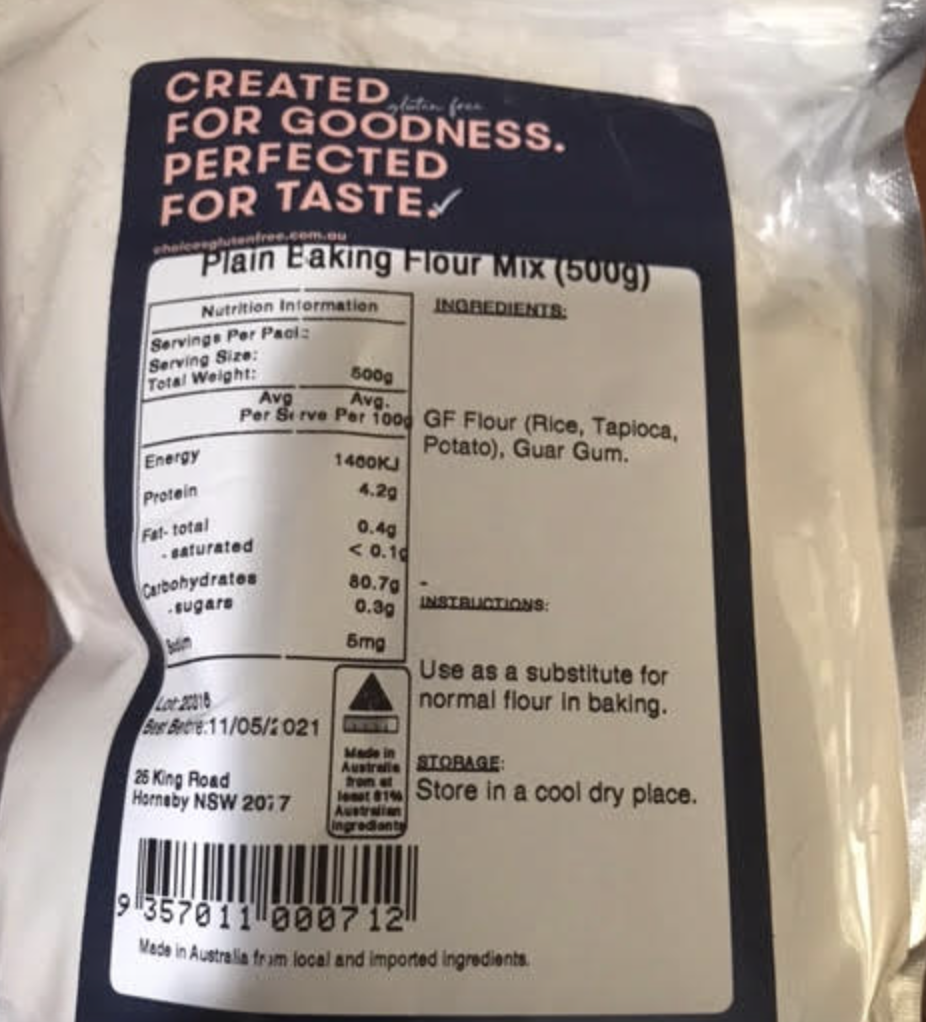
ANSWER:
In my experience most starches are modified (regardless of whether they are labelled as such). Starches can be cooked or roasted, treated with enzymes, or with various chemicals.
I would say 90% of the time I have questioned a manufacturer on a starch, it has turned out to be modified. Personally, I avoided starches.
Category:
Ultra Processed Ingredients
Leave a Reply
QUESTION:
What are your thoughts on Inulin? Many “healthy” recipes that attempt to reduce sweeteners seem to include inulin. My gut is telling me that it is an ultraprocessed ingredient and so no good but as I haven’t worked out yet how to sub it I thought I would ask. When I question it on groups that I am in the answer is that it is good because it also is a probiotic and also makes you feel full.
ANSWER:
My understanding of inulin is that it isn’t a whole food. It goes through an extraction process to be obtained. Usually chicory root, and it is soaked in a solvent. It then goes through a process to isolate the inulin, it is purified then spray dried. Obviously as we know, not all ingredients are the same. Some might be processed differently.
For sensitive individuals it can cause intestinal discomfort, diarrhea and anaphylactic reactions.
In terms of a replacement I would consider Lucuma powder – it is a dried fruit ground up. Another option is psyllium seed husks (from a fibre perspective). You may need to experiment though, I am unsure whether it can be replaced directly in recipes.
I personally avoid this ingredient and do not endorse products (ie for TWC) that contain it. Hope that helps!
Category:
Ultra Processed Ingredients
Leave a Reply
QUESTION:
What is Maltodextrin – good or bad?
ANSWER:
Maltodextrin is a food additive a highly processed sweetener. It is a spray dried powder. It is usually derived from any starch (potato, corn, wheat) by enzymes. You may also see it labelled as modified corn starch, modified tapioca starch, modified rice starch, modified wheat starch.
It is made by cooking the starches first, then adding acids or enzymes to break it down further. A white powder is the end product that is water soluble and has neutral taste.
Manufacturers use it to improve the mouthfeel of food and drinks. It is also used to thicken products such as infants formula. You will often find it as a filler in sugar substitutes. Interestingly, it is also used as a horticultural insecticide.
I recommend avoiding this ingredient.
Category:
Ultra Processed Ingredients
Leave a Reply
Question:
Why is vanilla extract not good?
Answer:
The short answer is that there are MANY different types of vanilla. There is pure vanilla, vanilla extract, vanillin, vanilla flavouring. The average consumer often doesn’t realise the slight differences on the label. They just see vanilla.
Vanilla is a very expensive ingredient and can often be in short supply. It is susceptible to fraud and adulteration.
Extract is usually produced by soaking the vanilla pod in alcohol. The problem is that some manufacturers will soak them in a solution which can have an artificial vanillin (lab created vanilla) base or other solvents or enzymes.
There is a lot of variations of vanilla extract on the market, some popular supermarket brands come with preservatives.
I only will buy a product if it states vanilla powder (and this is still susceptible to fraud) as it is hard to ascertain from the ingredient label how the vanilla has been processed. The manufacturers that have gone to the effort of securing vanilla bean powder understand the difference in the quality of the ingredients (generally speaking).
Category:
Ultra Processed Ingredients
Is there a vanilla powder or paste that you use Frankie, or is it better I wait until the ‘vanilla’ product choice gets enough votes to be a product review? Not trying to pre-empt anything. Thanks!
-
I only use vanilla powder or whole vanilla beans. It’s definitely worthy of a product review!
Leave a Reply
Question:
What is xantham gum and if a recipe asks for it what would you use as a substitute?
Answer:
Xanthan Gum derives its name from the type of bacteria used in fermentation processes – Xanthomonas campestris. This is the same bacteria that causes black rot that you see on broccoli, cauliflower, other leafy veggies.
It can be produced from simple sugars using a fermentation process. When a sugar is fermented by this type of bacteria it creates a broth or a gooey substance, which is made solid by adding an alcohol. It is then dried and turned into a powder. These sugars can come from many sources – wheat, corn, soy, dairy.
It is used as an additive for its thickening and stabilisation properties. You will often find it in many gluten free foods as it gives the food a stickiness that you would normally achieve with gluten.
This ingredient is also used in many industrial processes, for example, the oil industry to thicken drilling mud! You will also find it in cleaners (tile, grout, toilet bowl), paints, adhesives.
It is lab made ingredient.
Your body is unable to digest it.
It does not provide any calories or nutrients.
It is in the product for the manufacturers benefit not yours.
Real whole food alternatives to xanthan gum include:
– psyllium husk
– chia seeds and water
– ground flaxseeds and water
Category:
Ultra Processed Ingredients
Frankie, do you mind if I ask what wholefood sources do you use for thickening?
-
I don’t thicken many sauces…if I am making a gravy I will use a little bit of organic plain flour
Raeline, one of the Thermomix recipes I use regularly says to substitute xanthum gum for cornflour for a Paleo option. I have been using it because it uses less and is easier to add than creating a cornflour mix with water. I never really thought about it as I’ve seen in lots of ‘healthy’ Thermomix recipes. Thanks for posting the question. Frankie, is cornflour better or not really?
-
It depends on how it has been processed (they aren’t all created equal). Personally I haven’t used corn flour in over a decade. I opt for whole food sources that can still provide thickening capabilities but haven’t been through as much processing.
Thanks Frankie very interesting. The latest Thermomix low carb cookbook had recipes that include xanthum gum and I stupidly just purchased it without researching….
-
You are welcome. The world of our food is VERY interesting indeed!
Leave a Reply
QUESTION:
I would like some information regarding Vegetable Oil. What ingredients make up Vegetable Oil and how is it processed. Why is Vegetable Oil not a good option.
When it comes to replacing Vegetable Oil what is a good suggestion. This is more for deep frying chips. I make our own chips and fry in a deep fryer but not sure what oil to use.
ANSWER:
Vegetable oils are usually made from the following:
– canola
– sunflower
– cotton seed
– soybean
– corn
Processing:
Usually the process involves squeezing oil from the seeds at a high pressure. What is left behind is the oil and the protein. The problem is that often this high pressure comes with unnaturally high heat. This oxidises the oil. The protein (or seed cakes) are often washed in a chemical solvent (can be petroleum based) to extract the extra oil from the protein.
Next is a refining process, which is often a sodium hydroxide. Whilst it is soaking in this, it is spun in a vat to separate out the impurities. The oil can still be cloudy due to the natural waxes. Through a process of hydrogenation (trans fats are created) the wax solidifies so that it can be removed.
The oil is washed and filtered before its bleached. This is a lot to go through! It results in a harsh, rancid smell (shouldn’t this be a warning?!) and then is deodorised by using stem injected heating process. These vegetable oils are then stored into plastic containers (very rare to find glass ones) which is another issue again.
An enormous amount of processing and far removed form its original state!!
Why avoid vegetable oils?
Given all of this processing, this results in a product that is highly inflammatory and can lead to increased cancer risk.
The other issue is that when you see vegetable oils listed in an ingredients list, it often contains undeclared antioxidant additives such as B320 – BHA (Butylated hydroxyanisole) and 321 – BHT (Butylated hydroxytoluene).
These are nasty antioxidants that can cause the following symptoms:
– Aggressive behaviour
– Allergic and hypersensitive reactions
– Asthma
– Behavioural problems
– Learning difficulties
– Skin issues (eczema, dermatitis, hives, rashes etc).
It is difficult to know whether vegetable oils contain these oils without speaking to the manufacturers. It is easier to avoid products that contain vegetable oil.
I personally don’t use vegetable oils and don’t deep fry very often at all, and oven bake our chips / wedges instead. Alternatives I would look into for deep frying would be – olive oil, lard, tallow.
Category:
Ultra Processed Ingredients
Leave a Reply
QUESTION:
You mentioned that tapioca starch is highly processed and that tapioca starch and flour are two different things. I’ve come across some products labelled as tapioca flour (starch)/tapioca starch (flour) – why are the terms interchangeable here? How can we distinguish which one is additive free at the shops if we choose not to shop at TWC. Thank you!
ANSWER:
Yes, there is a difference between tapioca starch, flour and modified tapioca starch.
Tapioca flour is made from the crushed pulp of the cassava root. Cassava flour uses the whole root which tapioca flour use only the starchy pulp. It is normally is made by grinding tapioca pearls down into a powder. That’s it!
Tapioca starch is usually made by washing the pulp, spinning and washing until the mix is mostly pure starch and water. The starch is then dried.
The problem is that many commercial operations use modified tapioca starch and don’t declare the difference on the ingredient label.
Modified tapioca starch is made by physically altering the starch using enzymes or chemicals to change its inherent properties, and is considered an additive.
Unfortunately, it is difficult to tell just from the label as you don’t know what the processing methods are. This is one of the reasons why I need to ask so many questions of manufacturers to get the truth for you.
Category:
Ultra Processed Ingredients
I have checked the processing of that one and I am happy with it. It is the only one that I have found so far that meets my tests. I am trying to encourage other manufacturers to use this one instead.
Thanks for the explanation, Frankie! I’m looking at tapioca flour from the TWC website (AFK approved label) the ingredients state “organic tapioca starch”?
I’m late replying to this by a couple of years 🤣 but I use prunes with boiling water and garlic instead of hoisin or oyster sauce, with a dash of additive free tamari